
The 2025 African Cup of Nations (CAN), organized by Morocco, is today a spectacular showcase of the power of investments in sports infrastructure. Played across nine modernized or newly built stadiums in six cities, the competition serves not only as a football celebration, but also as a promotion of a model of regional sports diplomacy.
These ultra-modern facilities are part of a global strategy of the Shereef kingdom aimed at supporting its role as future host (alongside Spain and Portugal) of the 2030 World Cup, thus consolidating its geopolitical and economic influence through sport.
Comparatively, Tunisia faces significant structural challenges in terms of sports infrastructure. While countries in the region are organizing themselves to attract major events and strengthen their international attractiveness, Tunisia still has an aging fleet that is insufficient to meet continental or international standards.
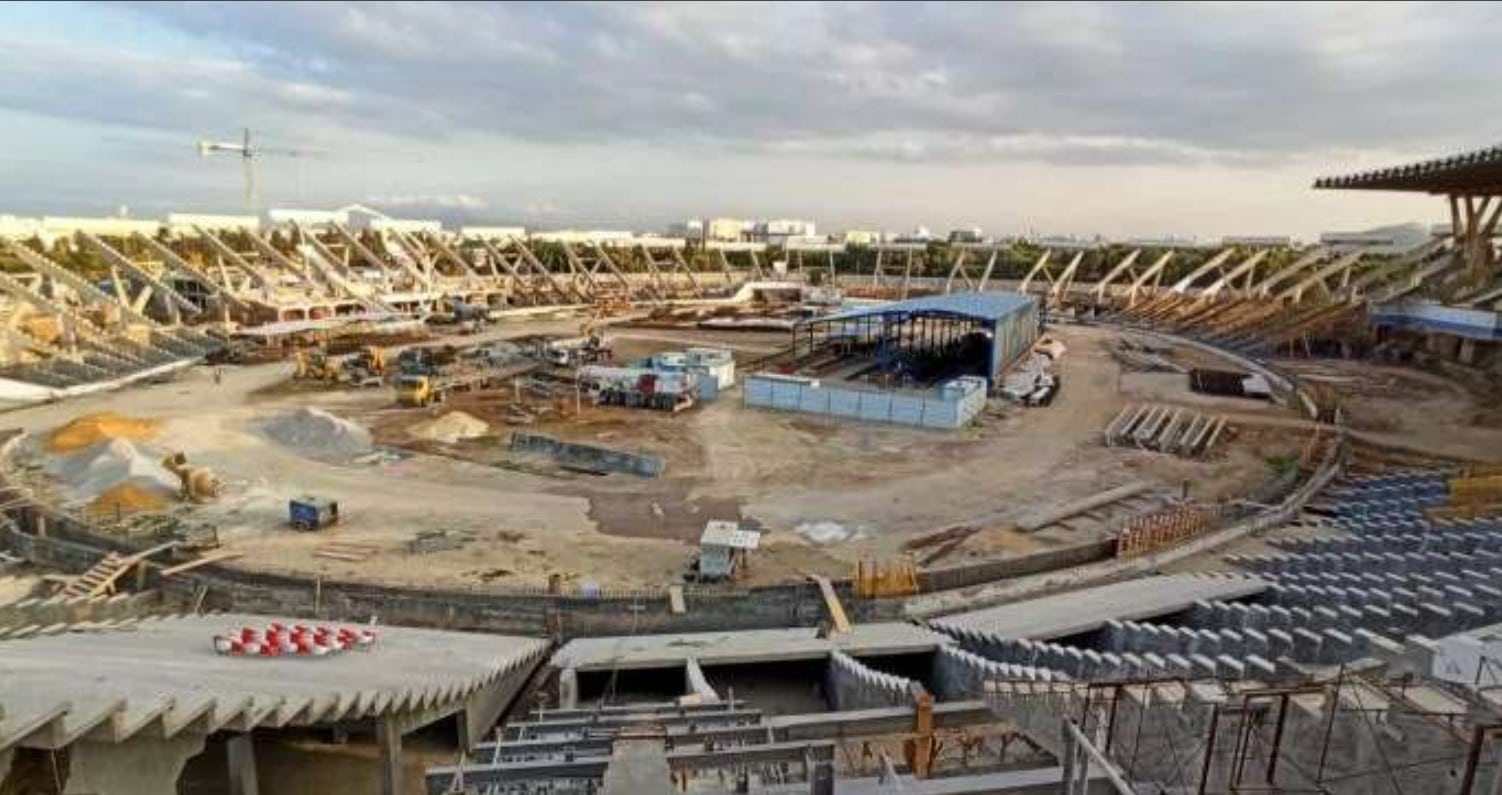
A striking example is the state of the El Menzah Olympic Stadium, one of the historic sites of Tunisian sport, whose renovation has been stalled for years. After repeated postponements and budgetary hesitations, a financing agreement was concluded with China to relaunch its reconstruction, marking an important step forward in the modernization of Tunisian sports infrastructure.
According to the Tunisian authorities, reconstruction work will begin in 2026, as part of a technical and financial partnership with Chinese companies, after the analysis of feasibility studies and an interinstitutional coordination effort.
A legislative and strategic framework currently being adopted
Beyond the El Menzah project alone, the Tunisian state is working on a structural reform of the sports sector. A new bill on sports structures is being developed. It aims to strengthen sports governance, improve the management of clubs and federations and stimulate investment in infrastructure, while promoting sports practice among young people.
This corresponds to an awareness that infrastructure is not only a place of competition, but a lever for economic and social development and international influence.
A striking indicator of this delay is the number of infrastructures meeting international standards. On the list of stadiums validated by the Confederation of African Football (CAF) for club competitions, only the Radès stadium appears for Tunisia, while Morocco has 12 approved stadiums, followed by South Africa and Algeria.
This difference reflects a broader reality: without a fleet of modern and multifunctional stadiums, Tunisia remains less competitive in hosting major sporting events, which serve as a vector of diplomatic soft power and economic attractiveness.
To bridge this structural gap and capitalize on the potential of sport as a diplomatic lever, several directions can be proposed according to experts:
- Accelerate the completion of the El Menzah project
Ensure clear procedures, a schedule and rigorous technical supervision so that this emblematic project becomes a reference for the future. - Diversify technical and financial partnerships
Take full advantage of international partnerships, while engaging in ongoing dialogue with public and private investors for other sports venues. - Adopt and apply a modern framework law
This framework must offer incentives for renovation and construction, integrate international standards, and strengthen the transparency of sports bodies. - Plan a sports diplomacy strategy
Draw inspiration from good Moroccan or South African practices to use sport as a state communication tool, aiming for targeted applications for regional and international competitions. - Strengthen the local sports ecosystem
Beyond the stadiums, invest in academies, training centers and young talent development programs to maximize social and competitive impact.
Read also