
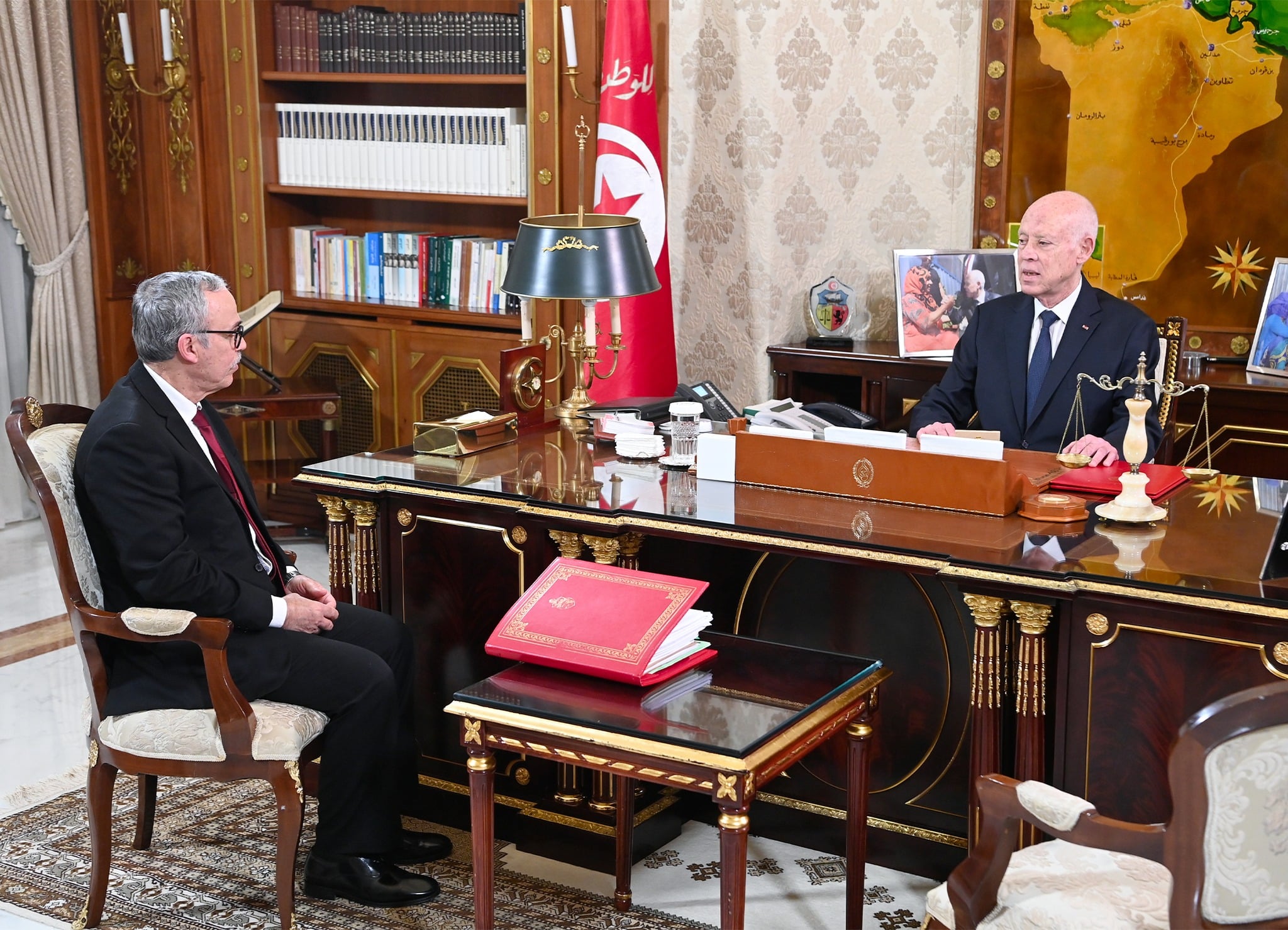
The President of the Republic, Kais Saïed, took advantage of his meeting yesterday, November 27, with the Minister of Social Affairs, Issam Lahmer, to bring to the forefront an issue that has become explosive: the increase in wages. A measure included in next year’s finance bill and which the Head of State presents as an assumed choice, far from being an exception or a luxury in the current context.
The president recalled that the increase in remuneration is part of the continuity of a tradition of the Tunisian State. According to him, the finance laws from 1973 to 1976 already included similar mechanisms, proof that salary adjustment is neither unprecedented nor unreasonable, but is part of a stated social logic. In his vision, a social State must take its responsibilities to guarantee dignity and equity, especially in a situation where purchasing power is eroding and regional disparities persist.
Beyond this issue, Kais Saïed insisted on the urgent sending of aid to several disadvantaged regions, recalling that marginalization is not a natural fact but the direct consequence of decades of inequitable policies. He stressed the need to offer all areas of the country the same development conditions and the same essential services.
Social funds
The president also insisted on the critical situation of social funds, calling for their restructuring to be accelerated and sustainable financing solutions to be found so that they can fully assume their role in social protection.
By placing the increase in wages in a historical and political framework, Saïed seeks to make it a strong symbol: that of a State which is taking back control of its redistributive functions. A message addressed both to the social partners and to public opinion worried about rising prices and economic tensions.
Read also