

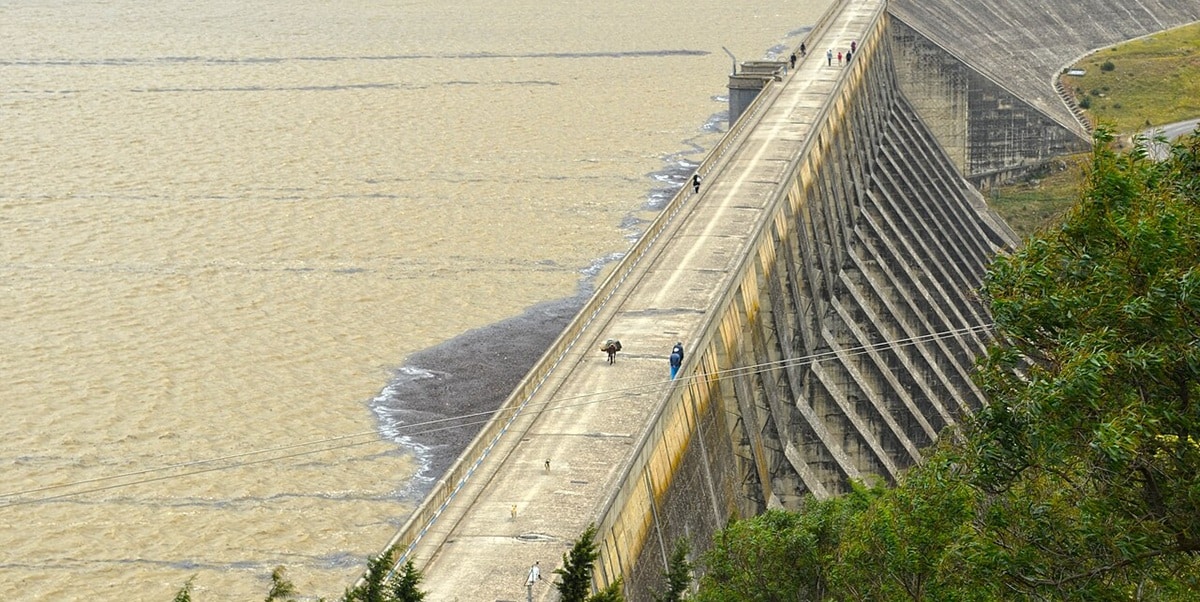
Recent rainfall has considerably strengthened the water reserves of dams in northern Tunisia. According to Faiçel Moslem, general director of dams and major hydraulic works at the Ministry of Agriculture, inflows reached 51 million cubic meters during the first eight days of December. According to him, these are very positive and reassuring indicators for the season.
Since the beginning of autumn, the northern dams have accumulated nearly 200 million cubic meters. This large volume has made it possible to consolidate the reserves dedicated to drinking water and could, if the rains continue at the same rate, also guarantee irrigation needs over the coming months.
The Béja region is among the most affected by this notable improvement. Since the beginning of September, its dams have recorded significant inflows which have boosted their stocks compared to the same period last year. The Sidi el Barrak dam thus increased from 74 to 148 million cubic meters. That of Sidi Salem increased from 92 to 122 million cubic meters. The Ksassab dam, for its part, saw its stock increase from 19 to 24.6 million cubic meters.
Good outlook
The region is also home to the largest dams in the country, including that of Sidi Salem, whose total capacity reaches 643 million cubic meters. Commissioned in 1982 on Wadi Medjerda, it supplies several governorates with drinking water and irrigation water. The delegation of Nefza, also in Béja, is home to the Sidi el Barrak dam, one of the most important in the territory, as well as the Ksassab dam.
These rainfall contributions strengthen the outlook for the coming water season, after several years marked by pressure on water resources.