

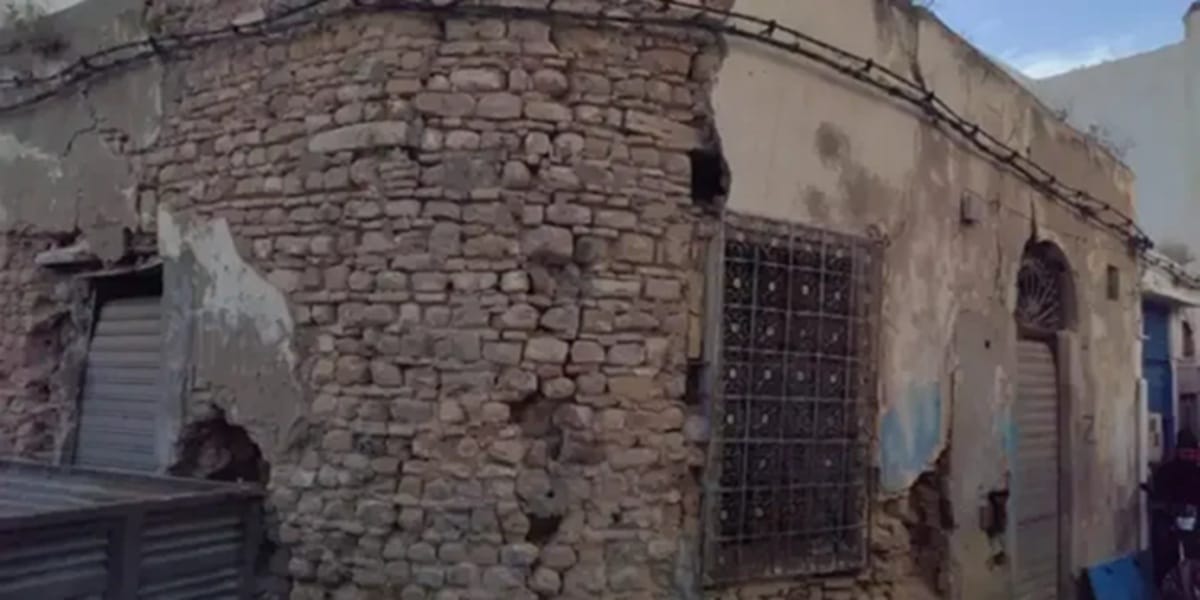
The municipality of Tunis indicated Thursday that 540 buildings today present an imminent or confirmed danger of collapse, out of a total of 1,350 dilapidated constructions recorded in the capital. Faced with this situation, 300 evacuations have already been ordered after technical inspections and legal decisions, according to a statement from Morched Besli to Mosaïque FM.
A new census which comes after a first alert in April
This strengthening of measures comes after a first alert had already been launched in April 2025. At the time, technical services had identified more than 1,100 high-risk buildings, including 513 considered a definite threat to public safety. The update announced today therefore extends an already worrying observation, revived by regional news.
Historic areas are among the most affected sectors: the Medina has 320 buildings at risk, followed by Bab Bhar (380 cases), Bab Souika (280) and Sidi El-Béchir (113). The latest assessments classify 287 buildings in imminent danger, 160 requiring heavy work, and around 110 requiring light interventions.
300 families temporarily supported
Evacuations concern buildings deemed the most critical. Affected families benefit from temporary accommodation, supported by the municipality in cases where no quick solution is possible. Final interventions – demolitions or restorations – will depend on the legal expertise still in progress.
Some of the buildings listed belong to the State or to foreign owners. In accordance with a decree published in June, these properties are not the responsibility of the municipality, which cannot undertake work in their place.
According to the Ministry of Equipment, around 5,000 fragile buildings are identified nationally, mainly in large cities.
The tragedy of Fez revives concerns
This new update comes as a deadly collapse hit Morocco this week: two four-story buildings collapsed in Fez on the night of Tuesday to Wednesday, killing 19 people and injuring 16 people.
A tragedy which recalls the seriousness of the risk in many towns in the region and reinforces the urgency of preventive measures.
Also read: