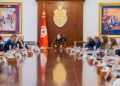

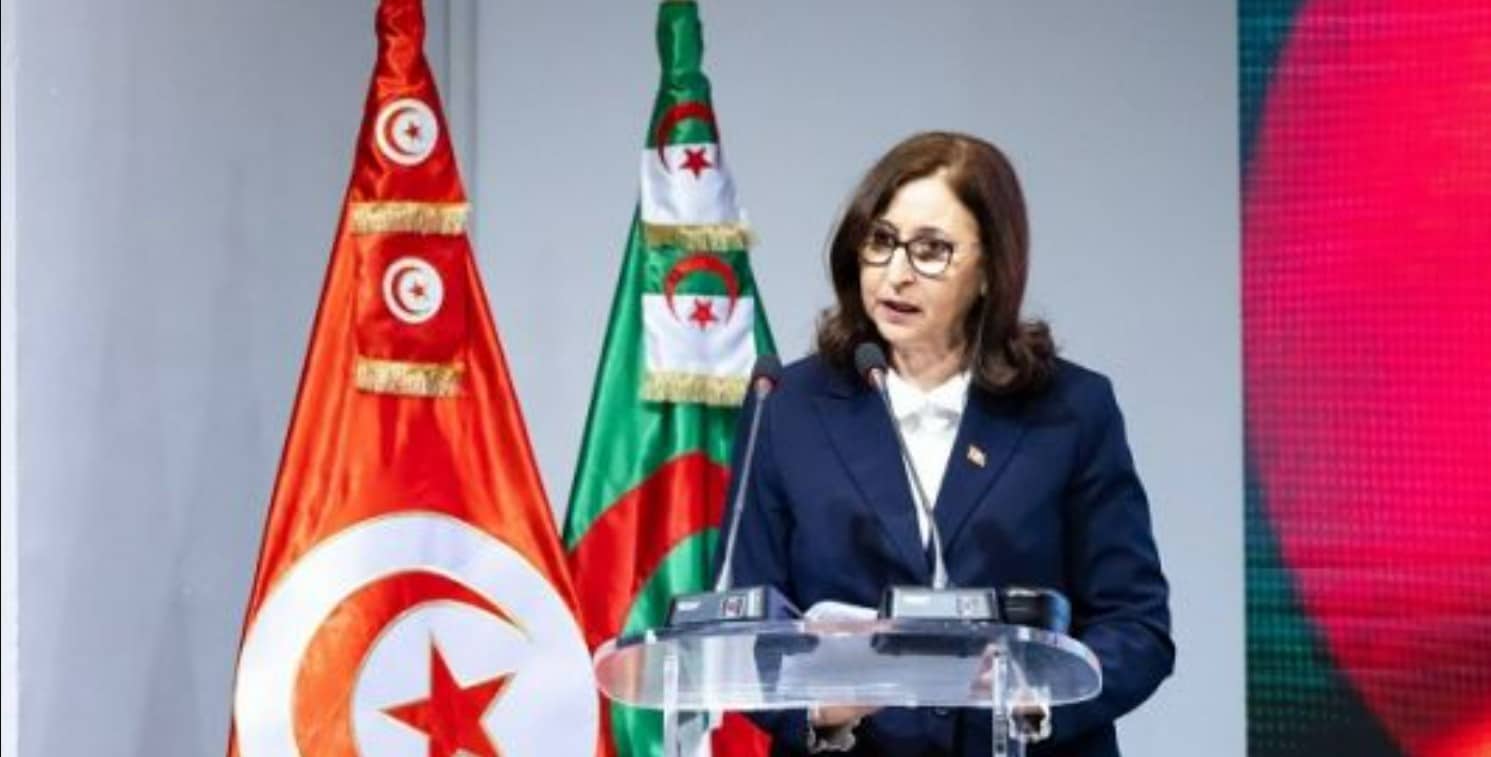
The head of government, Sarra Zaafrani Zenzeri, and the Algerian Prime Minister, Sifi Gharib, inaugurated on Thursday the work of the Tunisian-Algerian Economic Forum, organized on the sidelines of the 23rd session of the Joint High Commission between the two countries. The event brought together several Tunisian and Algerian ministers as well as the presidents of employers’ organizations, Samir Majoul for Tunisia and Djamel Moula for Algeria.
In her opening speech, the head of government highlighted the solidity of Tunisian-Algerian relations, describing the common history and political proximity between the two peoples as an “essential foundation” for building renewed partnerships based on mutual interest. She stressed that holding a targeted forum on industry, energy and tourism reflects the joint desire to strengthen strategic cooperation in these sectors considered as major pillars of bilateral investment.
The head of government also welcomed the involvement of the Tunisian Union of Industry, Commerce and Crafts (UTICA) in the organization of the forum, in close coordination with the Algerian Council for Economic Renewal, and the significant participation of private economic actors from both countries.
Zafrani Jenzri reaffirmed Tunisia’s determination to expand its international partnerships on the basis of mutual respect and sovereignty. She detailed the contours of the new national economic approach, focused on social justice, strengthening growth and resilience to external shocks.
According to her, Tunisia has initiated structural reforms which have already made it possible to improve several economic indicators. This progress is reflected in the performance of strategic sectors such as agriculture, construction, manufacturing and services.
Changing productive structure and upscaling
The head of government underlined the gradual transformation of the structure of Tunisian exports, now more oriented towards high value added products: automobile and electrical industries, electronic components, agri-food products, technical textiles, green and circular economy.
She added that the pace of foreign direct investments (FDI) continued to increase, recording during the first half of 2025 an increase of more than 21% compared to the same period in 2024. Ongoing infrastructure projects – transport, renewable energies, health, roads – demonstrate, according to her, a renewed confidence of international partners.
Zafrani Zenzri affirmed that more than 4,000 foreign-invested companies are currently established in Tunisia, generating around 460,000 jobs. This dynamic, combined with the recent acceleration of investment flows, constitutes, according to her, a strong signal on the credibility of the reforms undertaken and on the attractiveness of the Tunisian market.
She recalled that these efforts are part of the national strategy “Tunisia 2035”, designed as a new economic and social pact aimed at making the country a competitive economy based on knowledge, innovation and transparency, while simplifying procedures and improving the business climate.
The Tunisian-Algerian Economic Forum continues its work around B2B meetings and sectoral workshops intended to identify new joint projects, in a logic of complementarity and strengthening of exchanges between the two neighboring countries.