

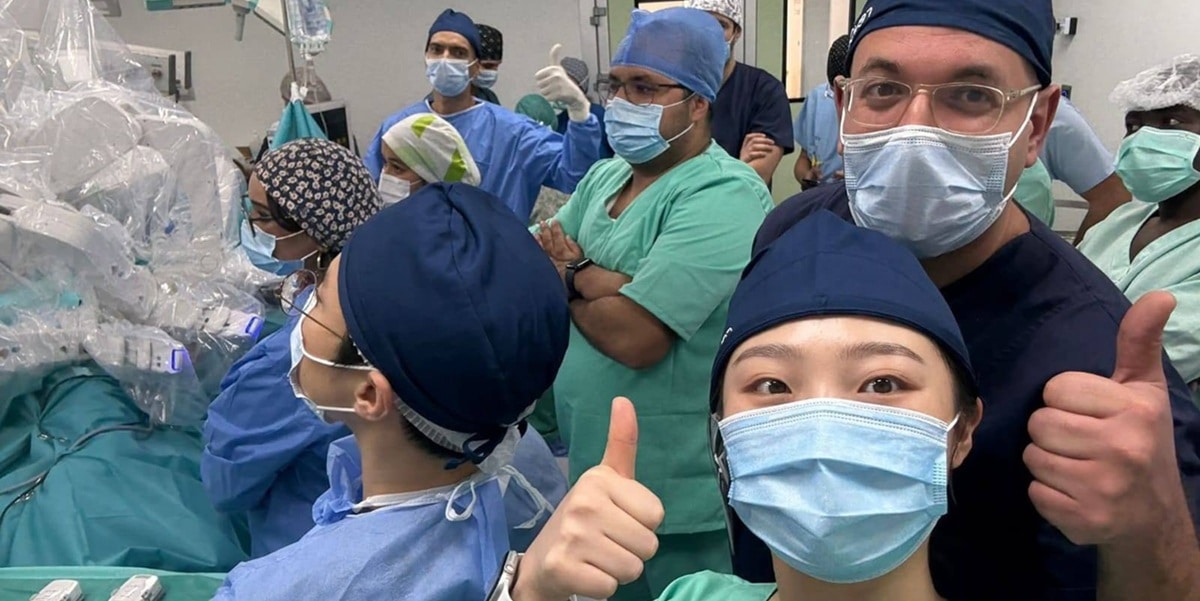
On December 16, 2025, Tunisia reached an unprecedented medical milestone with the completion of the first robot-assisted kidney surgery intervention ever performed in the country, at the Charles Nicolle University Hospital. Beyond the historic nature of the act, this success concretely broadens the field of high-precision surgical interventions now possible in Tunisia.
A strictly supervised national first
According to the Ministry of Health, the intervention – a successfully performed kidney ablation – was carried out by the surgery and kidney transplantation team at Charles Nicolle Hospital, under the supervision of Professor Riadh Ben Slama, in coordination with the anesthesia-resuscitation department headed by Professor Aliya Jabri.
A South Korean expert in robotic surgery provided technical support, alongside Tunisian medical and paramedical teams.
This is an absolute first in Tunisia, both in the public and private sectors, in the field of robot-assisted renal surgery.
Medical doors now open
This first intervention broadens the scope of high-precision surgical procedures that are medically possible in Tunisia, provided they are gradually and supervised deployment.
In urology, the discipline most directly concerned, robotic surgery is used internationally for:
- partial nephrectomy, allowing a tumor to be removed while preserving part of the kidney,
- certain prostate surgeries for localized cancers,
- complex reconstructive procedures requiring very fine dissection.
Beyond urology, the robotic platform also opens up prospects in:
- targeted digestive surgery, particularly for certain complex colonic or rectal procedures,
- gynecology, in particular for procedures requiring great precision, such as certain hysterectomies or endometriosis surgeries,
- certain selective oncological surgeries, when the preservation of tissues and nervous structures is decisive.
These extensions, however, remain conditional on the continued training of teams, the progressive validation of protocols and a rigorous selection of indications, robotic surgery not intended to replace conventional surgery in all cases.
A breakthrough in a constrained system
This technological breakthrough occurs in a hospital context under pressure. The public sector recruits between 900 and 1,000 new doctors each year, while recording the departure of 200 to 250 practitioners, maintaining constant tension on establishments. At the same time, modernization efforts are underway, with a digitization rate of medical records approaching 95% in public hospitals.
These data remind us that the sustainable integration of cutting-edge technologies such as robotic surgery requires an overall strengthening of the healthcare fabric, both in human resources and in equipment, maintenance and organization of care.
Also read: