

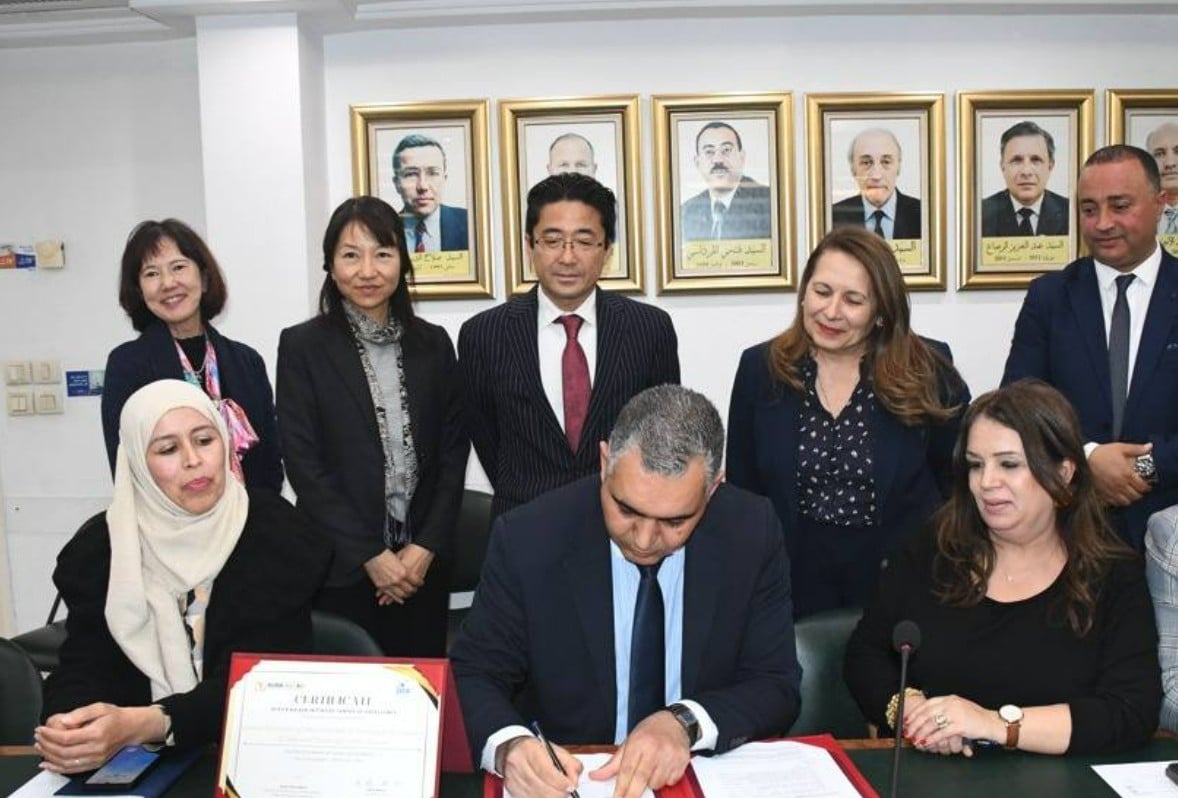
Tunisia has taken a new step in the promotion of modern management methods. A memorandum of understanding was signed this Monday, December 8, 2026, at the Ministry of Industry, Energy and Mines, between the General Directorate of Technological Renewal and Development and the industrial technical centers. The agreement concerns the management and animation of the Tunisian Kaizen Center of Excellence, dedicated to the dissemination of the culture of continuous improvement.
During the ceremony, two Tunisian companies were also distinguished: Leoni Wiring Systems and SOPAL, winners of the first and second African prize in the category of large companies for the performances obtained in the field of Kaizen in 2025.
Thanks to this designation, Tunisia will officially become a regional platform for the dissemination of Kaizen culture, supported by JICA (Japan International Cooperation Agency) and the African Development Agency. This center will aim to strengthen the competitiveness of Tunisian and African industries by promoting modern tools for quality, productivity and process optimization.
The Minister of Industry, Energy and Mines, Fatma Thabet Chiboub, welcomed the joint efforts of the various stakeholders, in particular the Japanese partner. She stressed that this dynamic will make it possible to extend the culture of continuous improvement to industrial technical centers, while relying on Tunisian skills.
The minister also insisted on the need to broaden the application of the program to other sectors, such as the mining sector, vocational training and tourism professions, in order to introduce greater efficiency and competitiveness.
Twenty years of Tunisian experience in Kaizen
The Tunisian-Japanese technical support program for improving quality and productivity, based on the Kaizen method, has been active in Tunisia since 2006. It has supported more than 200 industrial companies, helping them to implement productivity and quality tools. The results have resulted in a clear improvement in performance and products.
The program also trained more than 130 experts, supervised 54 trainers from establishments under supervision and launched new training cycles for the benefit of 29 trainees and executives from the National Institute of Standardization and Industrial Property.
This new stage confirms the Tunisian desire to be part of a sustainable dynamic of continuous improvement and industrial competitiveness.
Also read: “Kaizen”: How Japan teaches Tunisia how to improve its productivity