

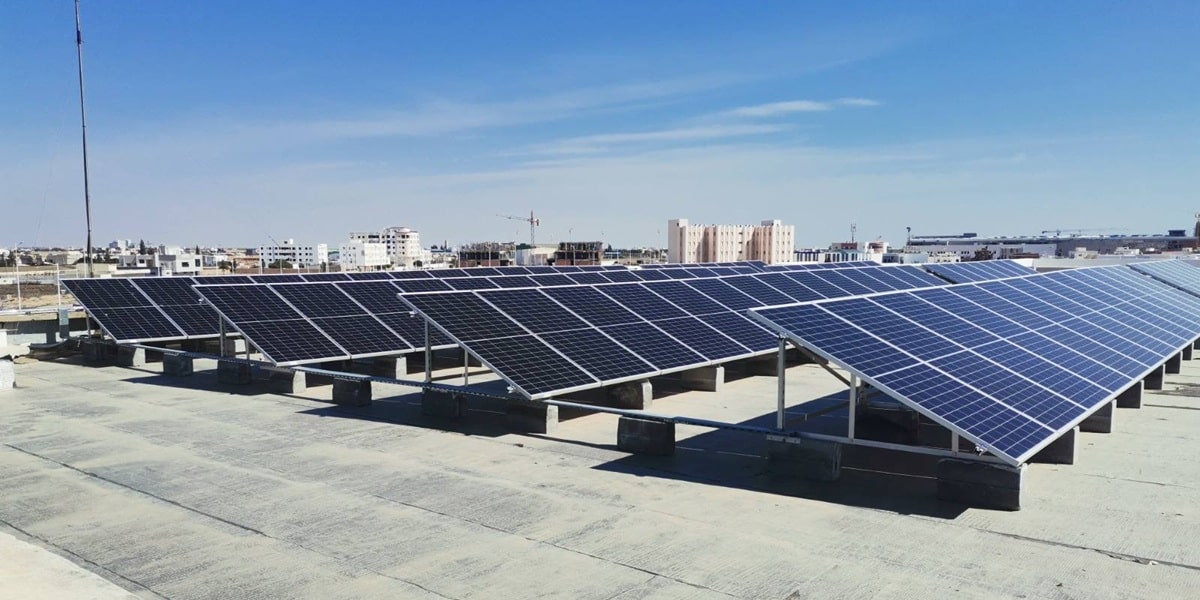
Tunisian higher education is taking a new step in terms of energy transition. In Sfax, a public university establishment has just put into service a charging station for electric vehicles powered exclusively by solar energy, a first on a national scale.
A Tunisian public university is making a concrete commitment to sustainable mobility. The Higher Institute of Industrial Management of Sfax has installed a charging station for electric vehicles with a power of 22 kW, operating thanks to a solar production unit. This initiative is part of a national pilot program supervised by the National Agency for Energy Management.
A pilot project at the heart of the energy transition
The terminal installed in Sfax is part of an experimental program aimed at deploying sixty solar charging stations across different regions of the country. Supervised by ANME, this project brings together universities, municipalities and public institutions around a common objective: reducing the carbon footprint of the transport sector and encouraging the use of electric vehicles.
For the university establishment, this achievement marks a turning point towards a campus that is more environmentally friendly and more aligned with the principles of sustainable development.
In an official communication, ANME underlined the symbolic and practical importance of this initiative, believing that it constitutes a notable step forward in the integration of clean mobility within university spaces.
Towards a national solar charging network
The project also illustrates the growing involvement of public institutions in the fight against greenhouse gas emissions and in the promotion of renewable energies.
Beyond the case of Sfax, the pilot program aims to gradually establish a national network of charging stations capable of supporting the growth of electric vehicles in Tunisia.
Work continues to equip the other planned sites, in line with the national strategy for energy transition, green economy and sustainable mobility.
Read also