
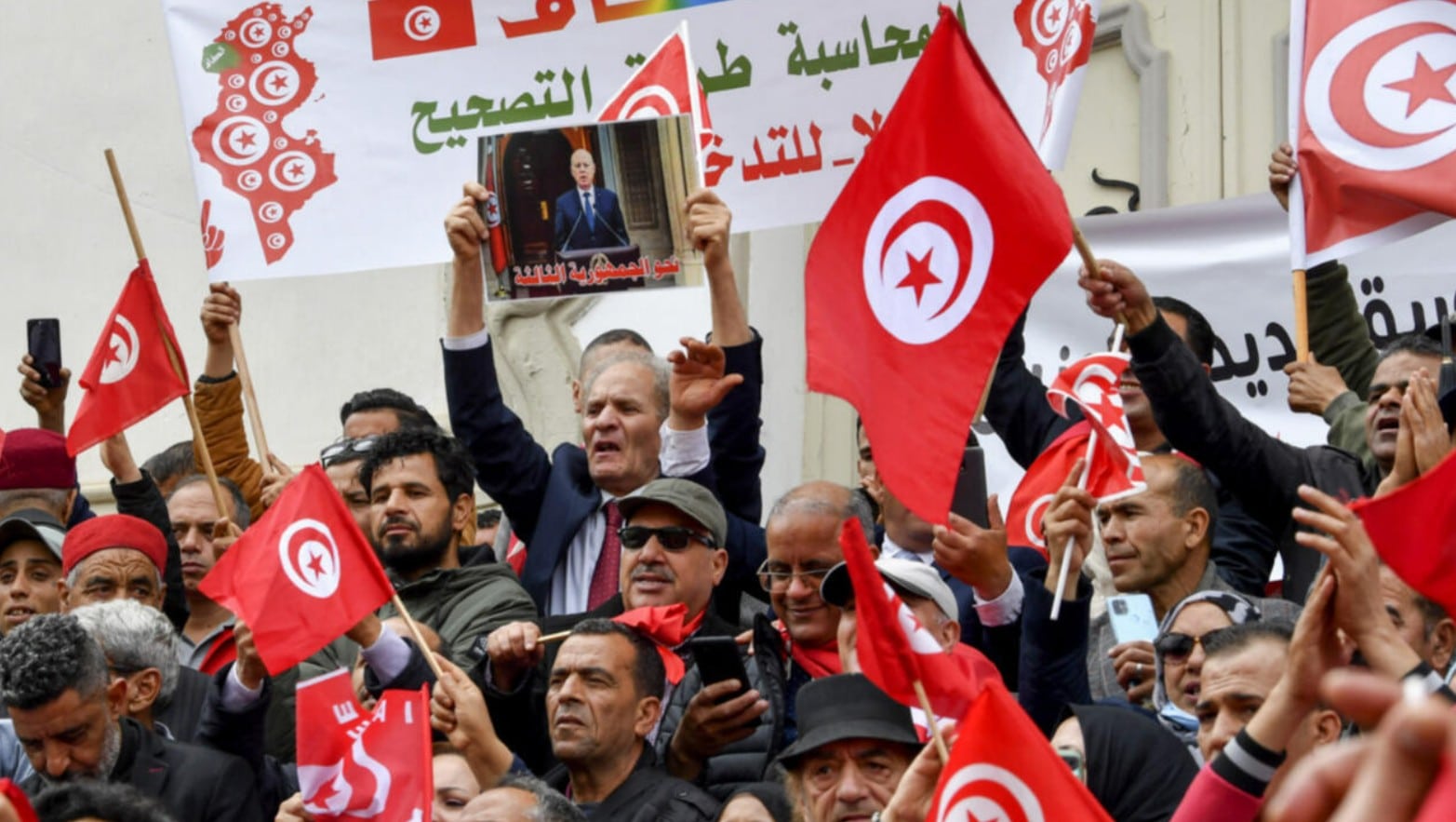
Supporters of President Kaïs Saïed are preparing a large mobilization on December 17, a date carrying a strong symbolic charge since it marks the start of the Tunisian revolution. The announced objective is to denounce “foreign interference” in the country’s affairs, a theme that has become central in the speeches of the head of state’s supporters. But beyond the sovereignist display, this initiative is part of a tense political moment where street dynamics are beginning to weigh.
For several weeks, major demonstrations have been organized in the capital and in several regions to denounce the deterioration of public freedoms, the arrests of opponents, and the use of the judicial system against critical voices. Slogans in favor of freedom of expression, the independence of justice and the release of political detainees have multiplied.
Faced with this dynamic, the president’s supporters are seeking to occupy public space in turn. Several support marches have been observed in recent months, affirming the need to defend national sovereignty and oppose any external pressure. December 17 is a continuation of this logic.
A political counter-narrative
The announced demonstration is seen as a counter-rally intended to respond to the rise in anti-regime protests. The choice of December 17 adds a strong symbolic dimension. By summoning the memory of the outbreak of the revolution, the organizers seek to place support for Kaïs Saïed in the historical continuity of the popular uprising of 2010, by redefining its meaning around sovereignty and the break with the old elites.
Between, on the one hand, mobilizations calling for respect for fundamental freedoms and, on the other, rallies supporting firmness in matters of national sovereignty, the Tunisian scene finds itself structured by two opposing visions.
The coincidence of these mobilizations, sometimes organized a few days apart, creates a climate where each camp tries to impose its narrative and influence the balance of political power.