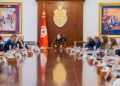

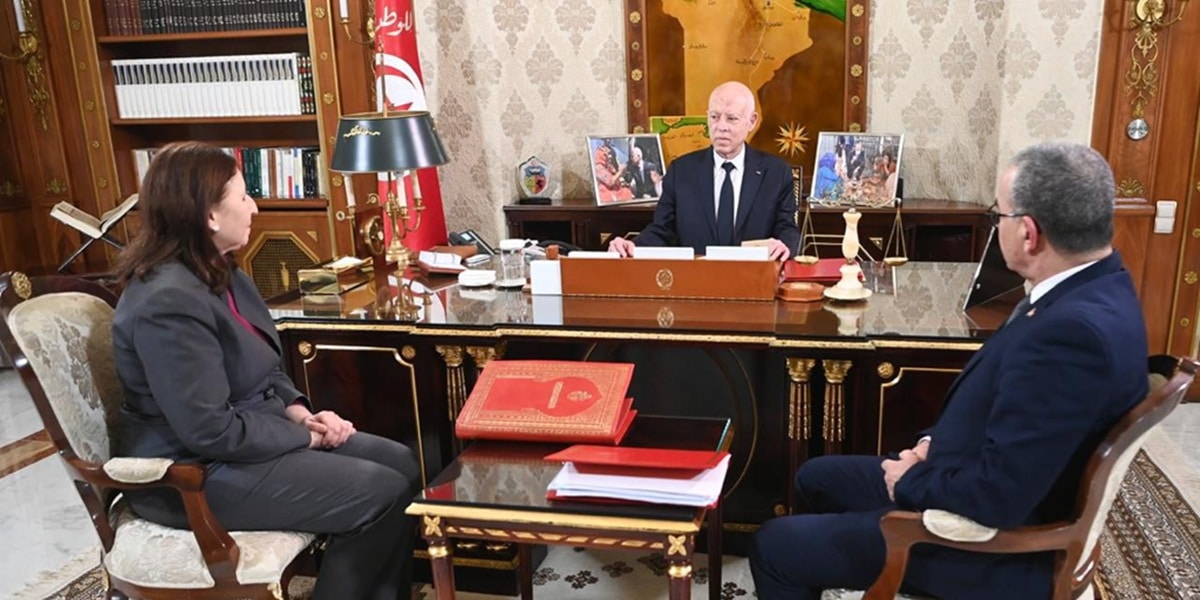
The Presidency of the Republic presented, on Wednesday January 7, the first elements of the 2026-2030 development plan, during a meeting at the Carthage Palace with the head of government, Sarra Zaafrani Zenzri, and the Minister of the Economy, Samir Abdelhafidh. The press release published at the end of this interview states that the project is based on a broad consultation carried out throughout the country, with 3,671 meetings held at local, regional and interregional levels.
According to the presidency, these meetings made it possible to bring up a set of priorities expressed by the participants: simplification of administrative procedures, improvement of educational establishments, acceleration of the execution of public projects, support for young people carrying initiatives, fight against unregulated urban expansion and strengthening of infrastructure, particularly in rural areas.
Bottom-up method
The press release emphasizes the approach, described as participatory and “bottom-up”, consisting of starting from local expectations before developing a national framework.
This approach is presented as an alternative to the centralized planning models adopted in previous cycles. The presidency sees this as a way to bring public policies closer to the needs expressed on the ground.
However, no details have been communicated concerning the financial decisions, the execution schedule or the quantified objectives of the future plan, which must be specified later in a final report.
Political positioning
The Head of State believes that these consultations outline a “development model” which would already be identified by citizens and likely to meet priority social expectations. He called for mobilizing administrations and ensuring that those responsible for implementation act “with integrity” and taking into account the general interest.
The speech also mentions an increased role for younger generations, described as ready to assume public responsibilities.
An ambition still to be clarified
In conclusion, the presidency evokes an important step in the country’s institutional journey, with the stated objective of strengthening social justice, freedom and dignity.
The publication of the final report and the concrete translation of these orientations on the ground will constitute the next steps.
Also read: