

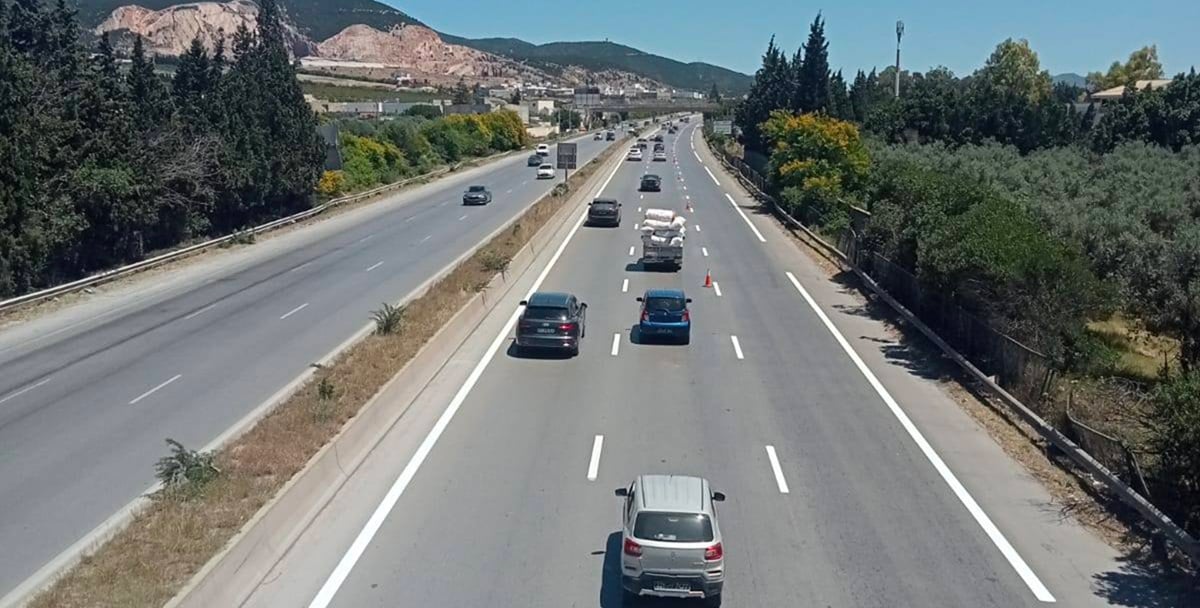
The Ministry of Equipment is undertaking a major overhaul of the national road network with an investment program estimated at 6.8 billion dinars. Between roads to be doubled, new interchanges, urban bypasses and highway projects, 2026 promises to be a pivotal year for Tunisian infrastructure.
The Ministry of Equipment and Housing plans to launch in 2026 a new wave of road projects totaling 6.8 billion dinars. Khaled Latrach, director of major works at the general directorate of bridges and roads, indicated during an intervention on National Radio that 76 projects are already underway for a cumulative cost of 4.2 billion dinars. The main national, regional and local roads are preparing to experience accelerated modernization in order to streamline traffic and strengthen security.
Structuring projects to modernize major roads
Several major operations will be implemented or in active phase during 2026, including:
- The double-tracking of the RN13 between Kasserine, Sidi Bouzid and Sfax, over 180 km, for 1.45 billion dinars, including 117 km of related tracks;
- Regional road 77 in Siliana, now administratively authorized to start;
- Local road 899 in Gafsa, 30 km long, for 60 million dinars, currently under tender;
- The Zarzis and Korba bypasses, work on which will begin or will soon be put out to tender;
- The strengthening of 189 km of numbered roads, for 275 million dinars;
- The construction of new interchanges and the development of 460 km of additional roads.
These projects meet a dual objective: improving interregional connectivity and reducing congestion points around urban areas.
Management of a dense and rapidly changing network
The road network supervised by the ministry totals 20,000 km, including:
- 4750 km of national roads,
- 6513 km of regional roads,
- 5940 km of local roads.
Rural roads extend over 58,800 km, half of which have already been developed. The 743 km of highways in operation are in addition to projects under construction or under study.
The ministry also monitors 3,800 engineering structures and hydraulic infrastructures, covering maintenance, diagnosis and control.
Progress on major highway and urban projects
Among the files monitored:
- The Tunis–Jilma highway has a progress rate of 33%, with entry into operation planned for early 2027.
- The extension of the southern entrance to Tunis is 70% complete. New portions will be opened within two weeks, notably at El Mourouj towards the El Yehoudia circular interchange. The overall completion of the project is set for the end of 2026.
- Regional road 27 Nabeul–Kelibia, delayed by various obstacles, will see its first section delivered by the end of 2025 or beginning of 2026, with completion planned for the end of 2026.
All of these projects confirm the authorities’ desire to fundamentally rethink national mobility, by making up for accumulated delays on certain routes and anticipating the increase in traffic.
The 6.8 billion dinars committed for 2026 constitute one of the largest volumes of investment dedicated to the road network in a decade, marking a turning point for territorial planning.