
Born on December 8, 1935, Stanislav Malakhov would have been 90 years old today. The one who was a lover of Tunisian landscapes leaves an impressive body of work.
Russian artist, Stanislav Malakhov has often stayed in Tunisia. Until his death in February 2019, he continued to create works whose epicenter was in the Tunisian landscapes. A retrospective exhibition paid tribute to his memory in February 2020 at the Khereddine Palace in Tunis.
In his own way, Stanislav Malakhov has republished a part of Alexandre Roubtzoff’s adventure at the beginning of the twentieth century. Indeed, like the latter, he traveled across Tunisia, seeking inspiration in landscapes and also in scenes of life. From Gafsa where he resided, he spread throughout Tunisia, leaving an impressive amount of works.
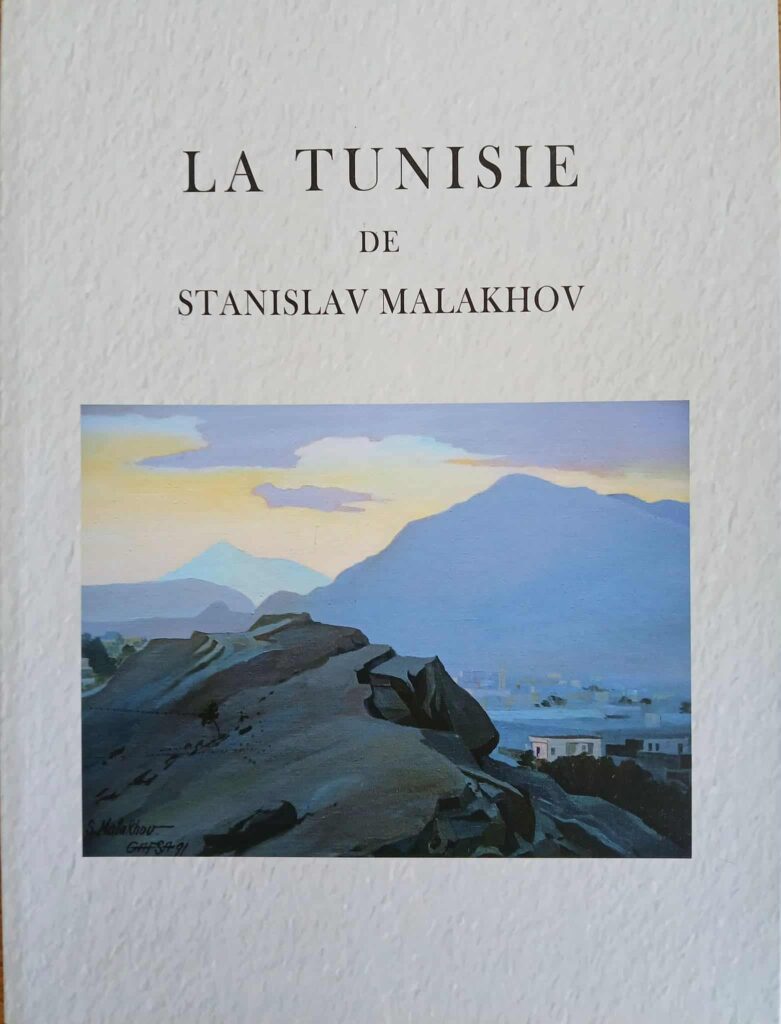
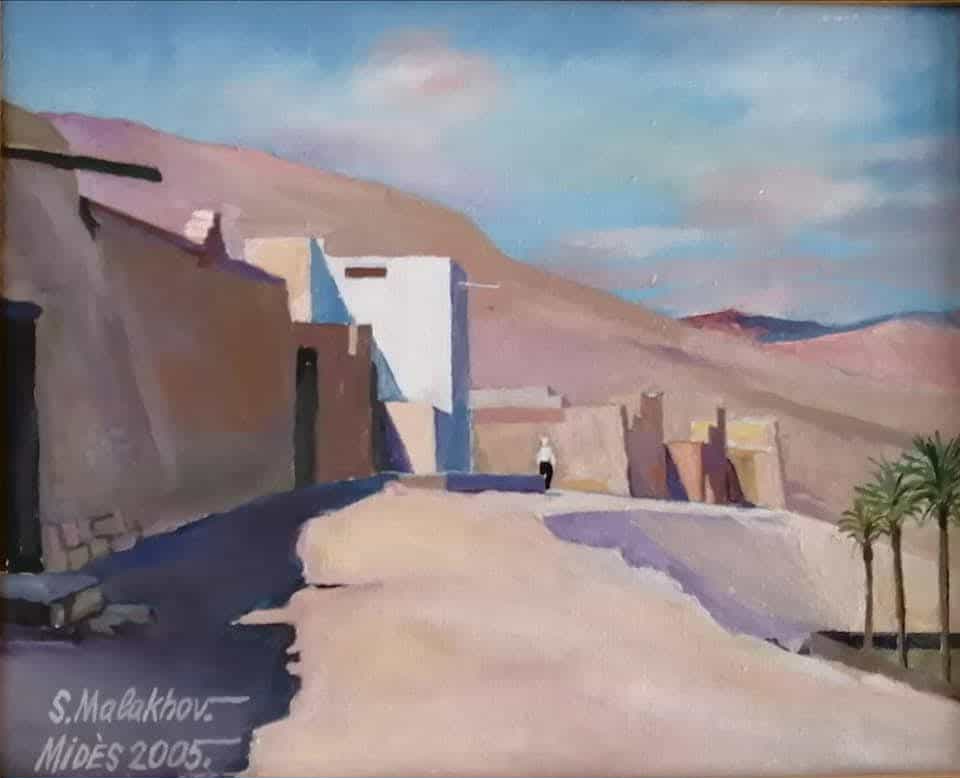
A landscaper at heart, Malakhov loved mountainous landscapes above all, which he managed to recreate admirably. From Orbata to Zaghouan, he painted tormented heights and slender peaks and was fond of the rather dark ocher color, so representative of our landscapes. Rendering the relief in its convolutions, our artist has created numerous paintings in the Midés gorges or around Thelja. Each time, he managed to recreate a tormented nature that one would say was torn apart and did so with respect for the harmonies which mix sky and earth in the same momentum.
Malakhov’s landscapes are plural. He loved to wander according to inspiration to capture the atmosphere of cities bathed in lights or that of alleys in the country’s medinas. His nocturnal paintings are a treat in themselves: under the full moon, he recreates parts of the dark medina and covers reality with a bluish halo. This series of Urban Nocturnes alone is worth the detour and, rarely, has an artist worked and excelled in this precise direction. Living in the south, Malakhov also had a clear predilection for oases and their miracles springing up in the form of waterfalls or green escapes in harsh nature.
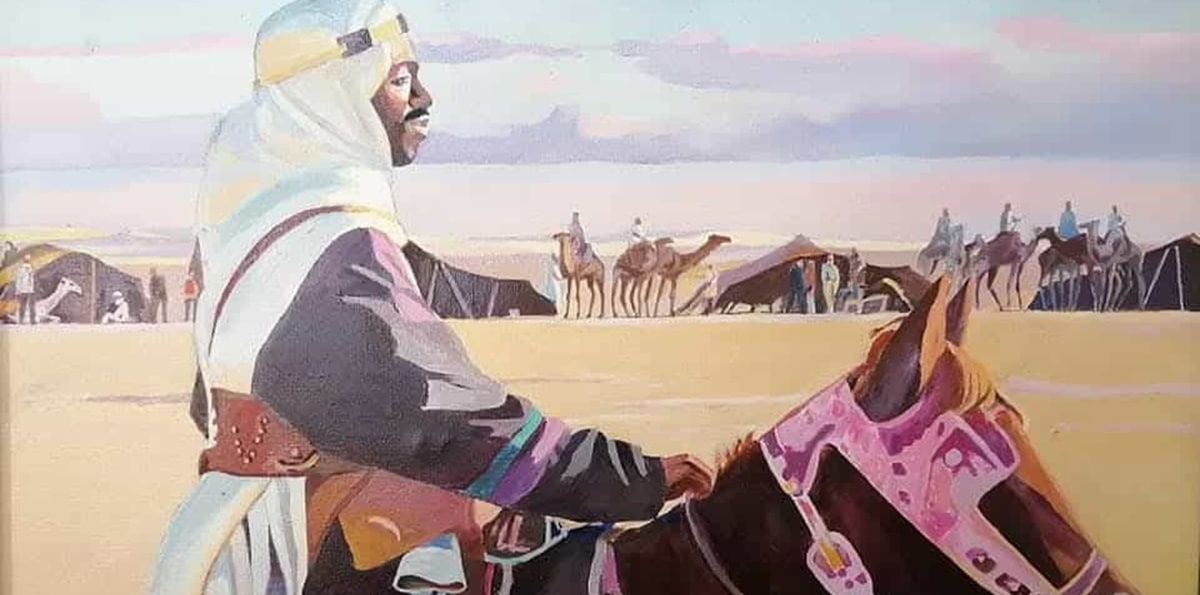
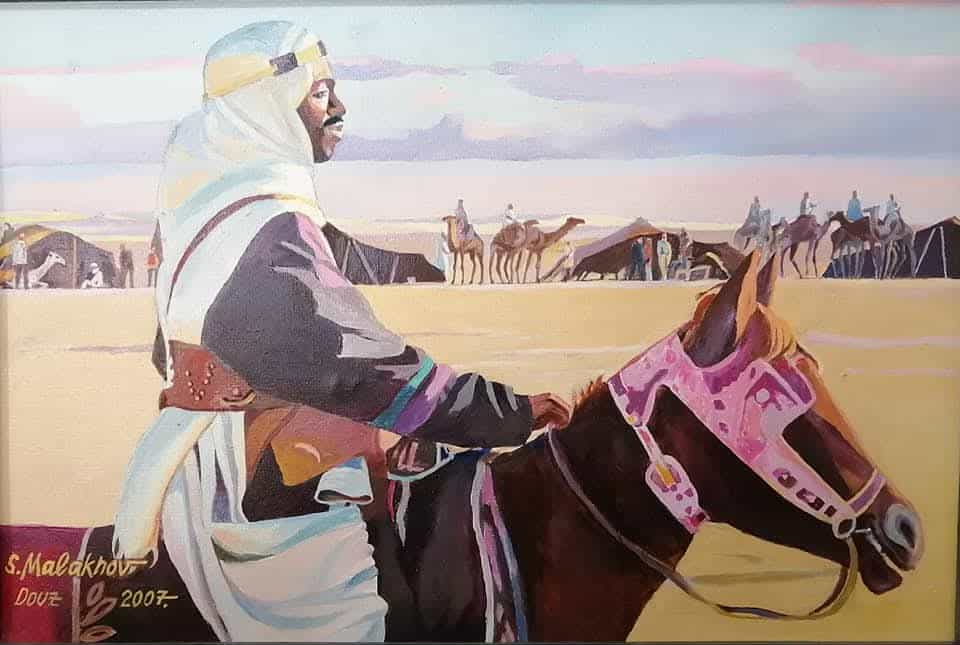
Whether they are horsemen or Bedouins, people from the south are also very present in Malakov’s work. There we find the caravan drivers and their camels, the riders engaged in their equestrian jousts and also the women in their costumes gleaming with light. What emerges from these works is an impression of the deep south and also a simplicity which borrows as much from the rustic as from the bucolic. Looking at these works, we easily imagine the artist and his equipment planted in the middle of nature or quickly sketching a drape, a silhouette or a broad gesture. These scenes of life captured between Sned, Tamerza, Chenini and Nefta are eloquent testimonies of a passion for the south.
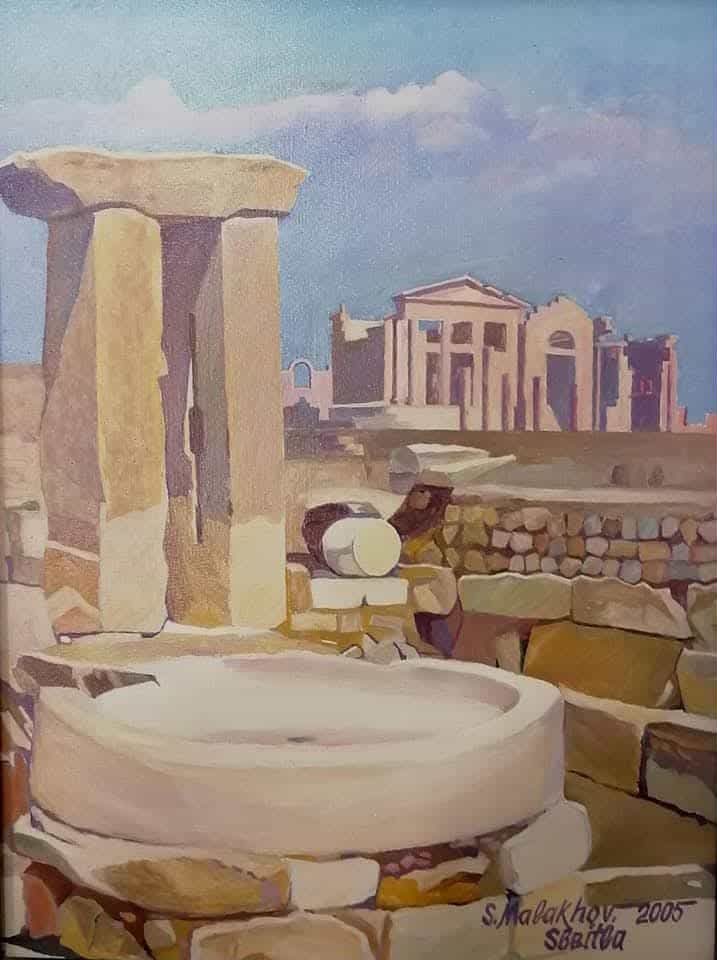
Another passion of the artist, archaeological sites are also very present in his collection of paintings. We especially find Dougga and Sbeitla there, painted in several facets and full of light. There we also find El Djem and its amphitheater or the Roman aqueducts and the shores of Carthage. Very precise in his work, Malakhov restores the patina of monuments and also their power. It seems to invite us to meditate on the passage of time and the permanence of stone. Or even on the incessant dialectic between the sea and the earth, the fluid and the solid. These games in which the artist engages are present in each of his works, whatever the technique.
Because if he is primarily fond of oil painting, Stanislav Malakhov does not hesitate to use pastels or try watercolors. For this last technique, a surprising series takes Sidi Bou Said as a motif in various aspects. In around ten watercolors, the artist summarizes everything, from the quintessence of light to the mystical atmosphere that floods the place. With a strong power of seduction, this series underlines how the hill of the Sufis lends itself to painting, how the plasticity of this village is exceptional. But beyond this incursion, Malakhov remains above all an oasis who knows how to track down the beauty of the south in its most surreptitious folds. Rarely has a painter accumulated so many works and sketches on the theme of Gafsa and its surroundings.
This long apprenticeship in the south taught him to master all the fluctuations of light that we sometimes find on paintings reproducing (rather recreating) the same landscape. Off the beaten track and without a reference anchored in a specific school, Malakhov restores a unique southern Tunisia, bathed in light and as if preserved in a virginal aura. In fact, Malakhov sublimates this south, transfigures it while painting it as it is. This is where the skill of this great artist lies, in the tradition of Alexandre Roubtzoff or Natacha Markoff.
Read also