
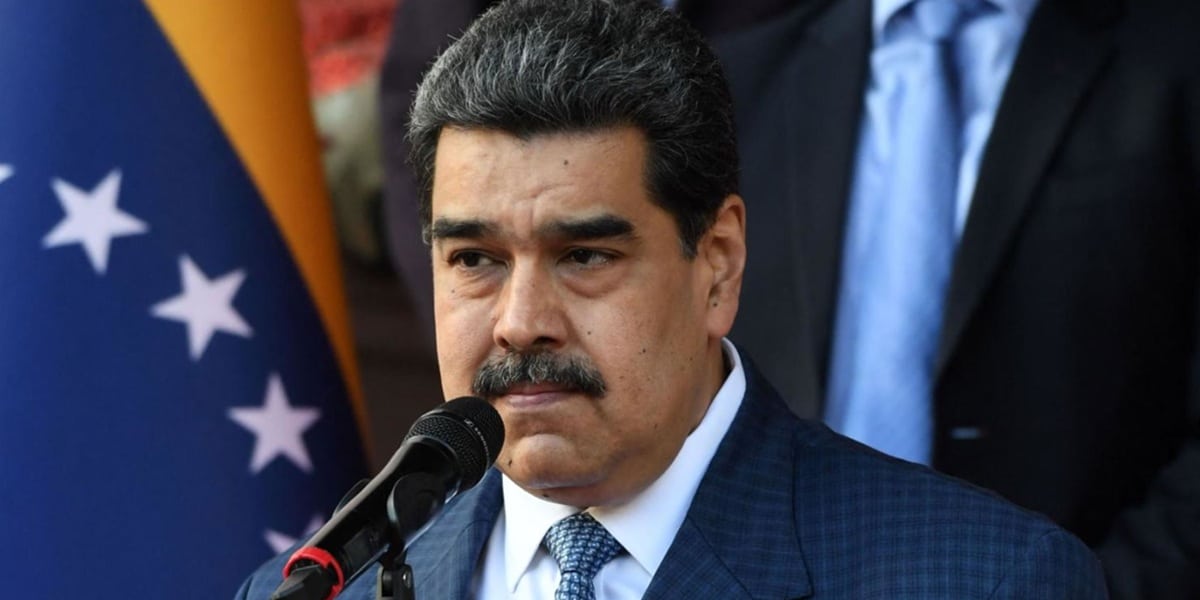
The scene marks a brutal break in contemporary international relations. After several months of threats and diplomatic pressure, the United States struck Venezuela, captured its president Nicolás Maduro and transferred him to a detention center in New York, where he must be tried by American justice. An unprecedented operation, immediately described as a “kidnapping” by Caracas, and which caused a global diplomatic shock wave.
According to US authorities, Maduro arrived at a US military base on Saturday evening after being seized in Caracas by US forces. Washington says it wants to bring the Venezuelan leader to justice for charges related to corruption and drug trafficking, without however specifying the exact legal framework that allowed this arrest.
Caracas denounces “kidnapping”
Venezuelan Vice President Delcy Rodríguez denounced a “flagrant violation of national sovereignty”, saying that Nicolás Maduro remains “the only legitimate president of Venezuela”. The Venezuelan government accuses Washington of having carried out regime change by force, in defiance of international law.
In the country, the first reactions oscillate between shock, anger and fear of a lasting military escalation. Local authorities speak of foreign aggression while calls for mobilization have been launched by Chavista circles.
Washington assumes and claims
US President Donald Trump claimed responsibility for the operation, saying the United States would now “manage” Venezuela and exploit its vast oil reserves. However, few details were provided on the exact nature of the planned administration, leaving great uncertainty surrounding the country’s institutional future.
This statement fuels accusations of economic motivations, in a country which holds one of the largest oil reserves in the world.
The UN is concerned about a precedent
Faced with the seriousness of the situation, the United Nations Security Council must meet urgently on Monday. Secretary-General Antonio Guterres has already warned that the arrest of a sitting head of state by a foreign power “sets a dangerous precedent” that could weaken the foundations of international law.
Russia and China have condemned unilateral action and denounced an attack on the sovereignty of a UN member state, while several Latin American countries express their concern about a possible return of direct American interventions on the continent.
A geopolitical shift
Beyond the personal fate of Nicolás Maduro, the American operation poses a central question: how far can a great power go in the name of justice or national security? The capture and trial of a foreign president opens a legal and political gray zone, likely to redefine the rules of the international game.
In Caracas as in the capitals of the world, the same question dominates: will international law emerge unscathed from this episode, or are we witnessing the entry into a new era of assumed power relations?
Also read: