
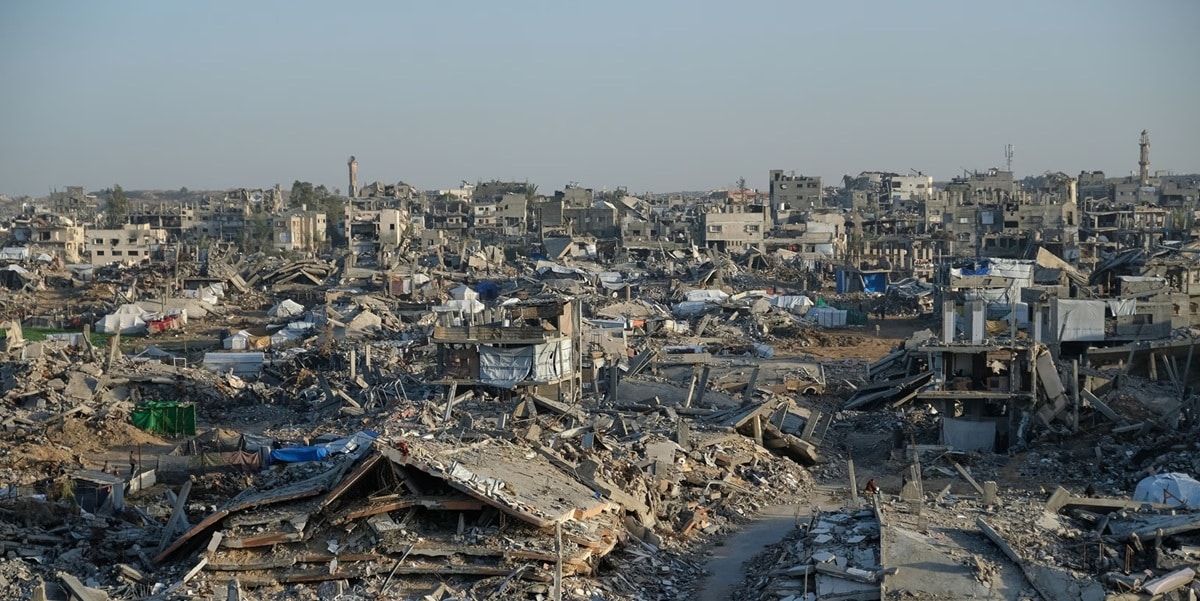
The entry into the second phase of the ceasefire between Israel and Hamas remains very uncertain, while the Palestinian movement must soon hand over the remains of the last Israeli captive held in the Gaza Strip.
Hamas indicated that it was ready to discuss a “freeze” of its weapons in order to facilitate the move to the second stage of the agreement. For his part, Israeli Prime Minister Benyamin Netanyahu acknowledged that the implementation of this phase would be “difficult”, while affirming that it could theoretically begin by the end of the month.
But on the ground, the results of the first phase greatly complicate the equation.
Violations and increased pressure on Netanyahu
Since the start of the truce on October 10, Israel has increased violations, according to the Gaza authorities, who record more than 590 incidents and at least 360 Palestinians killed during this period. The agreement required a complete cessation of operations, a withdrawal behind the “yellow line”, increased humanitarian access and the exchange of prisoners. But Israeli forces continued their operations, maintaining a level of aid significantly lower than the commitments made, in a context where UN agencies are still warning of a critical nutritional situation for thousands of children.
This reality further weakens Benyamin Netanyahu, faced with criticism from his coalition, opposed to any concession, and American pressure to apply the 20-point plan supported by Washington. By affirming that “the war is not over” and that Hamas will be “disarmed”, the Israeli Prime Minister is struggling to reconcile his internal political commitments with international diplomatic demands.
A phase 2 still out of reach
On the ground, the planned withdrawal behind the “yellow line” remains incomplete, with Hamas accusing Israel of advancing the limit every day, causing new displacements of civilians. Humanitarian aid remains insufficient, largely commercial, to the detriment of large agencies like UNRWA.
Despite political announcements, no date has been set for the launch of phase 2, which requires agreement on the governance of Gaza, the possible presence of an international force and the supervision of a transitional body. The persistent differences between the parties make the implementation of this step highly uncertain for the moment.
Also read: