
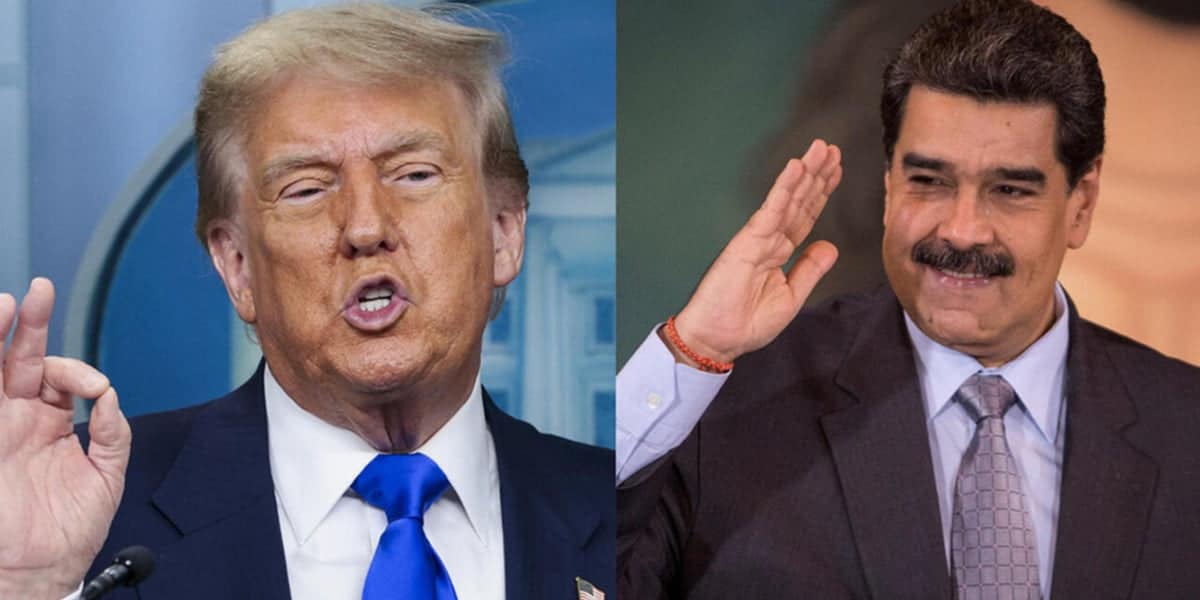
During the night from Friday to Saturday, Venezuela fell into a sequence of unprecedented gravity. After several hours of explosions in Caracas and other parts of the country, US President Donald Trump claimed that US forces had captured Venezuelan President Nicolás Maduro, confirming a direct military operation carried out on Venezuelan soil.
According to witnesses cited by Reuters, detonations, low-altitude aircraft flyovers and thick plumes of black smoke were observed in Caracas from 2 a.m. (06:00 GMT), for nearly ninety minutes. Power cuts affected the south of the capital, near a major military base. The Venezuelan government says strikes also targeted the states of Miranda, Aragua and La Guaira.
A spectacular announcement, still without independent confirmation
In an official statement, Donald Trump assured that Nicolás Maduro had been “captured and exfiltrated” following these strikes, presented as a large-scale operation. At this stage, no independent confirmation has come to corroborate this announcement, and the Venezuelan authorities have not recognized the capture of the head of state.
A few hours earlier, Caracas had declared a state of emergency and announced the mobilization of the armed forces, denouncing “imperialist aggression” and accusing Washington of wanting to seize the country’s strategic resources, notably oil and minerals. The Chavista government assured that the United States “would not achieve its objectives”, without specifying the situation of President Maduro.
From maximum pressure to direct intervention
If confirmed, the capture of the Venezuelan president would mark a historic turning point in relations between Washington and Caracas. For several months, the Trump administration has increased economic sanctions, public threats and targeted military operations, mainly at sea, against ships accused of drug trafficking.
The United States disputes the legitimacy of Nicolás Maduro, whom it accuses of rigging last year’s presidential election to stay in power. Donald Trump, returning to the White House with a hard line on Latin America, recently estimated that it would be “smart” for the Venezuelan leader to leave power.
Washington has at the same time significantly strengthened its military presence in the region, with the deployment of an aircraft carrier, warships and combat planes in the Caribbean, while evoking a possible blockade of Venezuelan oil.
A regional shock with uncertain consequences
In the streets of Caracas, stupor dominates. On social media, numerous videos show residents filming the explosions from their windows, sometimes between cries of fear and disbelieving silence. No human toll has been communicated at this stage.