
The 36th edition of the Carthage Film Festival celebrates two emblematic figures of the seventh art this year: Claudia Cardinale, a global icon and daughter of Tunis, and Walid Chmait, a pioneer of film criticism in Lebanon. Two remarkable paths united by the same love for cinema and a deep attachment to Arab culture.
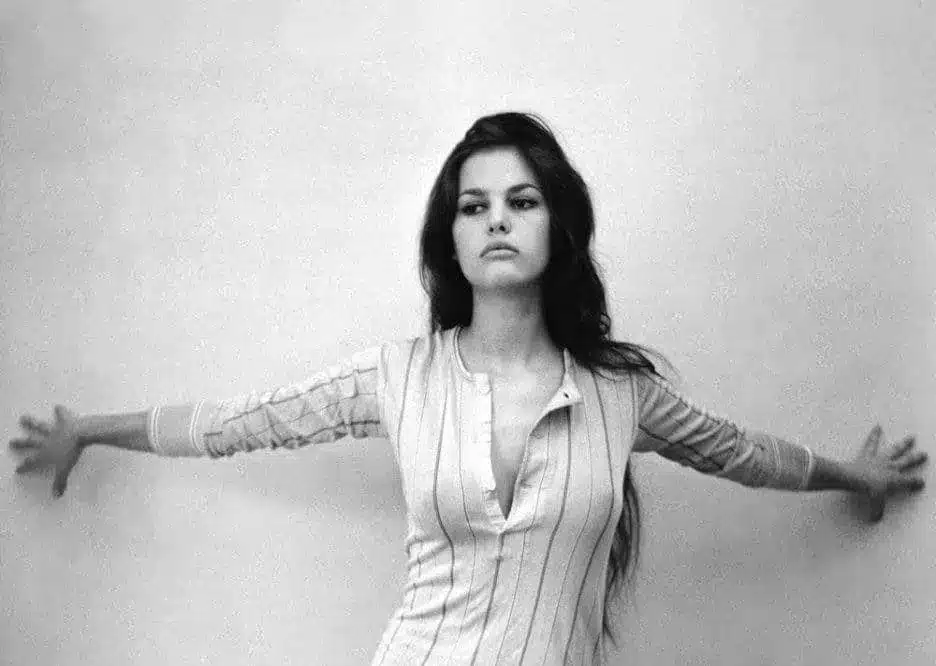
The tribute to Claudia Cardinale carries a particularly special meaning. Known worldwide as the muse of Visconti, Fellini, and Leone, she is being honored in the country of her birth — a country to which she has remained deeply connected throughout her life. Her cinematic journey both begins and culminates in Tunisia, marked by fidelity, memory, and emotion.
Three screenings accompany this tribute: Les Anneaux d’or (1956) by René Vautier and Mustapha El Fersi, Claudia Cardinale: La plus belle Italienne de Tunis (1994) by Mahmoud Ben Mahmoud, and Claudia Cardinale: La Tunisie… splendeur et beauté (2025) by Lotfi Bahri. Three films that, each in their own way, tell the story of a lasting love between a woman and her homeland.

It was in Tunisia, in the heart of Tunis, that everything began. As a teenager, Claudia Cardinale won the contest for “The Most Beautiful Italian Girl in Tunis,” organized by the Italian Embassy. The prize opened the doors of cinema to her: she then shot her very first film, Les Anneaux d’or, partly filmed in Sidi Bou Saïd. This short film, produced by the Tunisian National Cinema Center, marked the starting point of an exceptional career. From that shoot, she would always keep a particular tenderness — that of a Tunisian youth bathed in sunlight, the Arabic language, and the familiar streets of her native city.
Decades later, Claudia Cardinale continues to return to Tunisia — to reconnect, to draw inspiration, and to film. Her most recent work, L’Île du pardon (2022) by Ridha Behi, once again brought her back to the country she has never left in spirit. Between her first role in Sidi Bou Saïd and her latest shoot in Djerba, a whole life of loyalty and love unfolds — that of an artist who, while belonging to the world, has never ceased to belong to Tunisia.
In paying tribute to her, the Carthage Film Festival honors not only an international star but also a daughter of Tunis — a symbol of unwavering devotion and a living link between Tunisia and world cinema.

The same edition also pays tribute to Walid Chmait, a pioneer of Lebanese film criticism and a respected figure in Arab cinema, through the screening of the documentary Walid Chmait, une vie au cœur du cinéma, directed by his son Selim Saab Chmait. A simple and heartfelt homage to a man who devoted his life to nurturing a love of cinema and passing on his passion.
Neïla Driss