

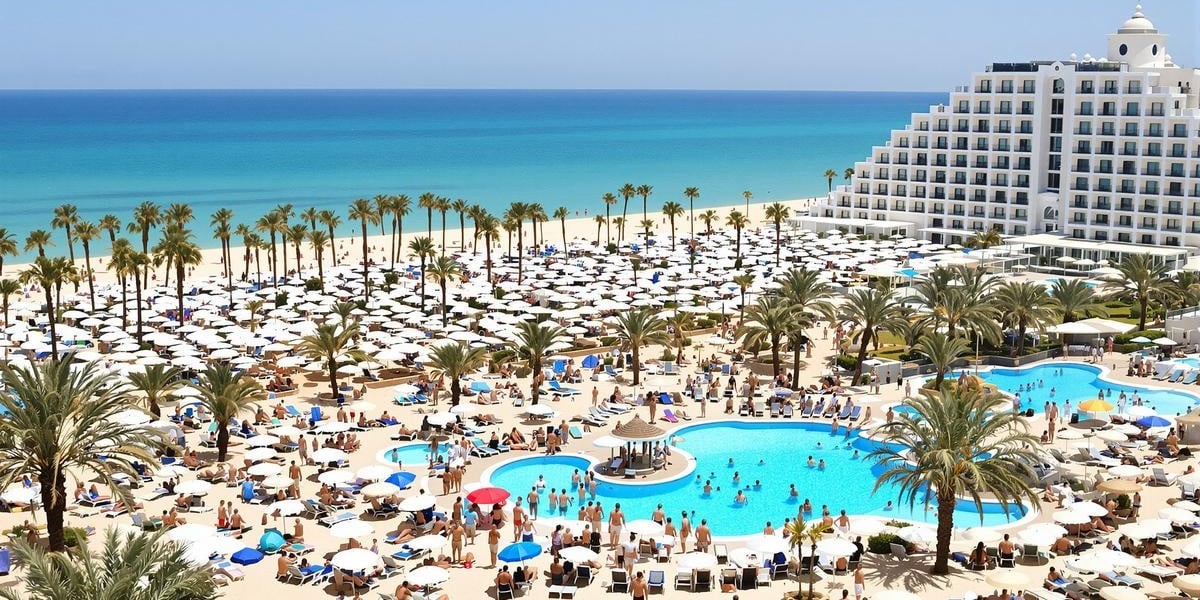
By integrating the Top 50 global destinations to visit in 2026 according to Travel and Tour WorldTunisia marks a symbolic return to the international tourist map. A recognition based on a dynamic of recovery, a change in travelers’ expectations and a strategic geographical positioning, but which also reveals the structural limits of the sector.
The first factor explaining Tunisia’s entry into the Travel and Tour World ranking is due to the dynamic of gradual recovery of the tourism sector. After years marked by political instability, health crises and the decline of traditional markets, the Tunisian destination is gradually reconnecting with international flows.
This type of ranking not only rewards destinations that are already saturated, but also those that show credible rebound potential. Tunisia appears today as a destination “under reconstruction”, which is finding more stable attendance, regaining the confidence of certain European markets and gradually reintegrating the catalogs of several international tour operators.
This recovery trajectory weighs heavily in the assessment of specialized platforms like Travel and Tour World, which value dynamics as much as the absolute level of performance.
An offer in line with the new expectations of travelers
The second determining element lies in the evolution of the behavior of international tourists. Travelers are increasingly looking for experiences, authenticity, a change of scenery and destinations that are less saturated than the major classic European hubs.
In this area, Tunisia has a real comparative advantage. The country still offers an experience perceived as accessible, relatively affordable and culturally exotic. The quality-price ratio, the human proximity, the diversity of experiences and the feeling of a “destination to discover” fully correspond to the new trends in global tourism.
In an increasingly standardized global market, this argument now carries almost as much weight as numerical performance.
Always strategic geographic and logistical positioning
The third factor is the structural positioning of the country. Tunisia benefits from immediate proximity to Europe, an already existing network of tourist infrastructure and a significant reception capacity.
Unlike many emerging destinations, it does not need to build a tourism sector from scratch: hotels, airports, resorts and tours are already in place. This capacity for rapid restart constitutes a major asset in the eyes of international analysts, particularly in a context where tourist flows quickly recompose themselves after each crisis.
Exceptional tourist wealth in a small space
It is only then that the most obvious argument comes into play, but not necessarily the most decisive: the diversity of the tourist offer. On a relatively small territory, Tunisia concentrates a major archaeological heritage, prominent historical sites, an extended Mediterranean coastline, a Saharan desert, oases, classified medinas and a strong cultural identity.
Few destinations can offer, in the same trip, Roman ruins, historic cities, beaches, desert and cultural tours. This density of experiences remains one of the country’s main structural assets and justifies its presence in a world ranking.
A ranking which also reveals serious weaknesses
Although Tunisia appears in the Top 50, it only occupies the bottom step. This position reflects as much a recognition as a limit. Several handicaps continue to weigh heavily on its image and competitiveness: instability of international communication, weakness of tourism marketing, uneven quality of services, slow pace of infrastructure modernization and persistence of a perception of risk in certain markets.
Added to this are well-known structural problems: excessive dependence on seaside tourism, low promotion of cultural and Saharan tourism, fragmented governance of the sector and lack of strategic vision readable internationally.
Clearly, Tunisia is perceived as a destination with strong potential, but still incompletely exploited and insufficiently transformed.
Entry into the world Top 50 is less a consecration than a signal. That of a country which is gradually returning to the international tourist radar, but which still remains far from the top destinations. To transform this recognition into real lasting success, Tunisia will have to go beyond the logic of a simple restart and initiate a profound overhaul of its tourism model.