
Tunisian justice has confirmed on appeal the convictions targeting former security executives in the “dark room” case. A case emblematic of the gray areas of the security apparatus and sensitive state archives.
The Court of Appeal locks the verdict
The criminal chamber of the Tunis Court of Appeal confirmed, Tuesday evening, the judgment rendered at first instance in the so-called “dark room” case of the Ministry of the Interior. All of the accused received sentences of eight years in prison, thus confirming the firm position of the justice system in this case with sensitive political and security ramifications.
This decision comes after the hearing, Tuesday January 6, 2026, of the main defendants as part of the appeal procedure. The debates focused on a file dating back to the discovery of sensitive documents hidden in a closed office within the ministry.
Former senior security executives at the heart of the matter
Several former officials of the Ministry of the Interior, as well as the former head of the counter-terrorism brigade, appeared before the court. The case targets eight people: Atef Omrani, Boubaker Laabidi, Mohamed Friji, Kais Bessifi, Sami Waz, as well as three accused currently on the run, Mustapha Khedher, Abdelaziz Daghssni and Ridha Barouni.
Among those convicted are former leading executives, including a former director of the anti-terrorism unit and a former head of specialized services, which gives the case major institutional and political significance.
Last May, the criminal chamber of the Ariana Court of First Instance had already sentenced the eight accused to eight years in prison each. The confirmation of the verdict on appeal closes, on a legal level, a case which has long fueled controversies and suspicions surrounding the management of certain sensitive files within the ministry.
Sensitive documents at the center of the investigation
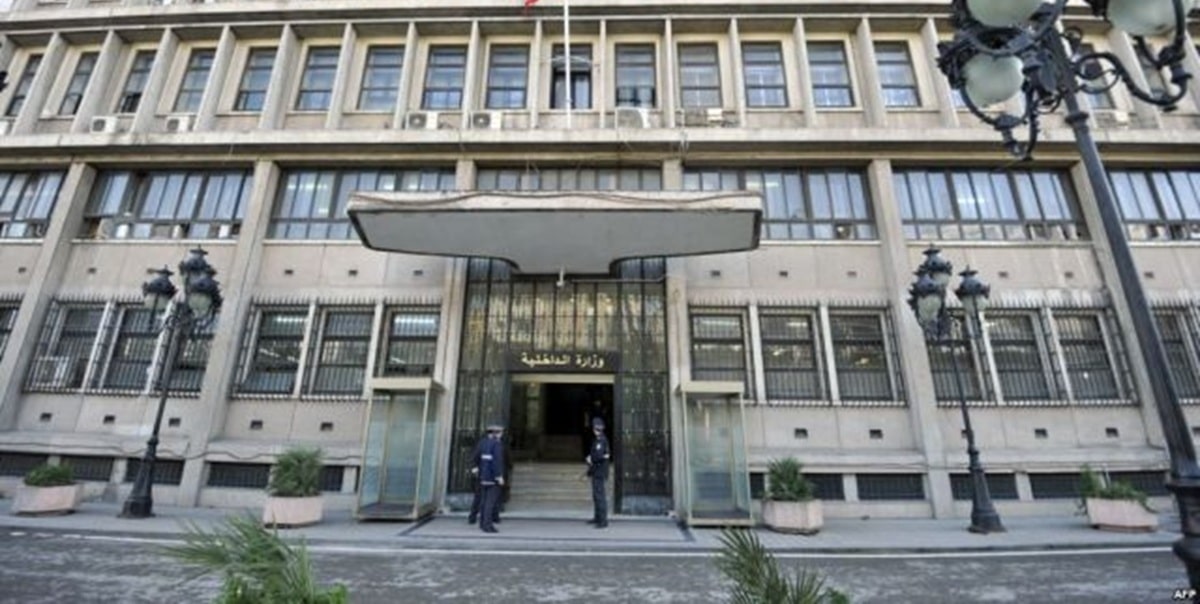
The affair originated in the discovery of numerous documents hidden in a closed office of the Ministry of the Interior. The defense of the martyrs Chokri Belaïd and Mohamed Brahmi quickly demanded the lifting of secrecy on these documents, believing that they could contain decisive elements linked to the files of the two political assassinations.
The “Committee for the Defense of the Two Martyrs” had, for its part, presented documents implicating Mustapha Khedher, affirming that he maintained links with the Ennahdha movement and carried out intelligence activities.