

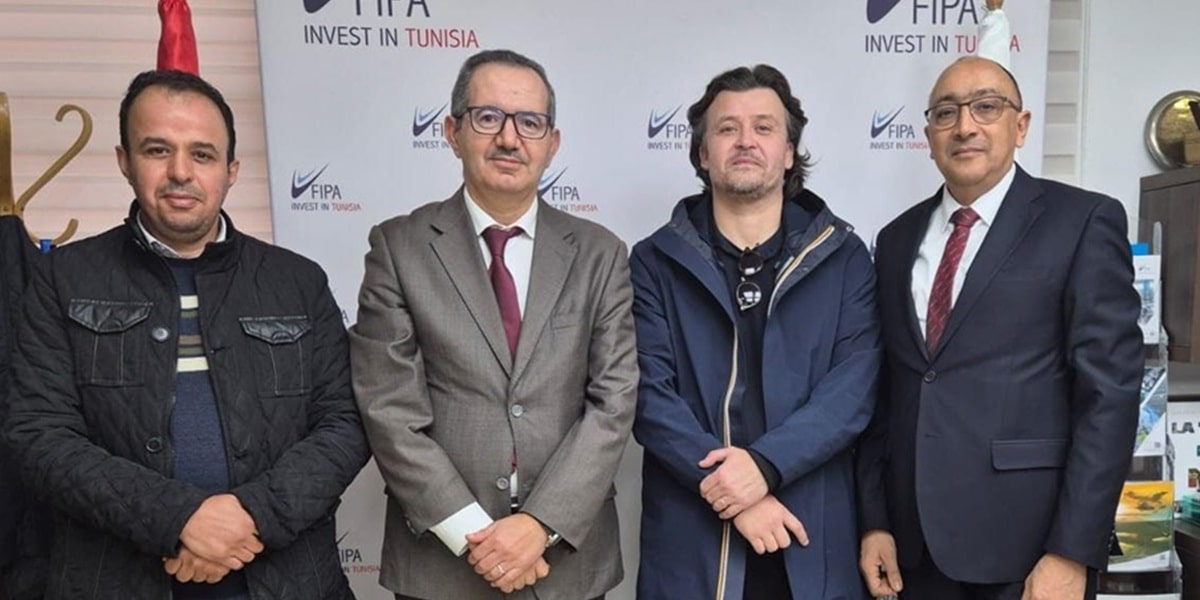
The reception, on December 22, 2025, of the founder of nextProtein at the headquarters of FIPA-Tunisia takes place in a context of increasing investment linked to alternative proteins in North Africa.
This meeting follows the announcement, on December 14, 2025, of the closing by nextProtein of a fundraising of 18 million euros, intended in particular for the extension of its industrial capacities in Tunisia. The company plans to open a second production site in early 2026, increasing its capacity to 12,000 tonnes per year of insect-based ingredients.
A sector still embryonic on an African scale
Globally, insect protein production is estimated at between 80,000 and 220,000 tonnes per year, mainly intended for animal feed. In Africa, the sector is still largely emerging, despite identified potential linked to the availability of organic waste and the growth in animal feed needs, particularly in aquaculture.
Sector projections anticipate a global capacity of between 500,000 and 700,000 tonnes annually by 2030, opening prospects for industrial platforms located close to European and African markets.
Tunisia as a regional entry point
According to FIPA-Tunisia, this type of project is part of a strategy aimed at positioning the country as a regional industrial platform for high value-added activities. Tunisia highlights its production costs, the availability of a qualified workforce and its geographical location between Europe and sub-Saharan Africa.
As the domestic market remains limited, the sector’s outlets are mainly oriented towards export. Compliance with international health standards and traceability of inputs are among the conditions necessary to access European and regional markets.
Founded in 2015, nextProtein is developing a model based on the valorization of organic waste transformed into insect proteins, intended mainly for aquaculture and animal feed.
Also read: