
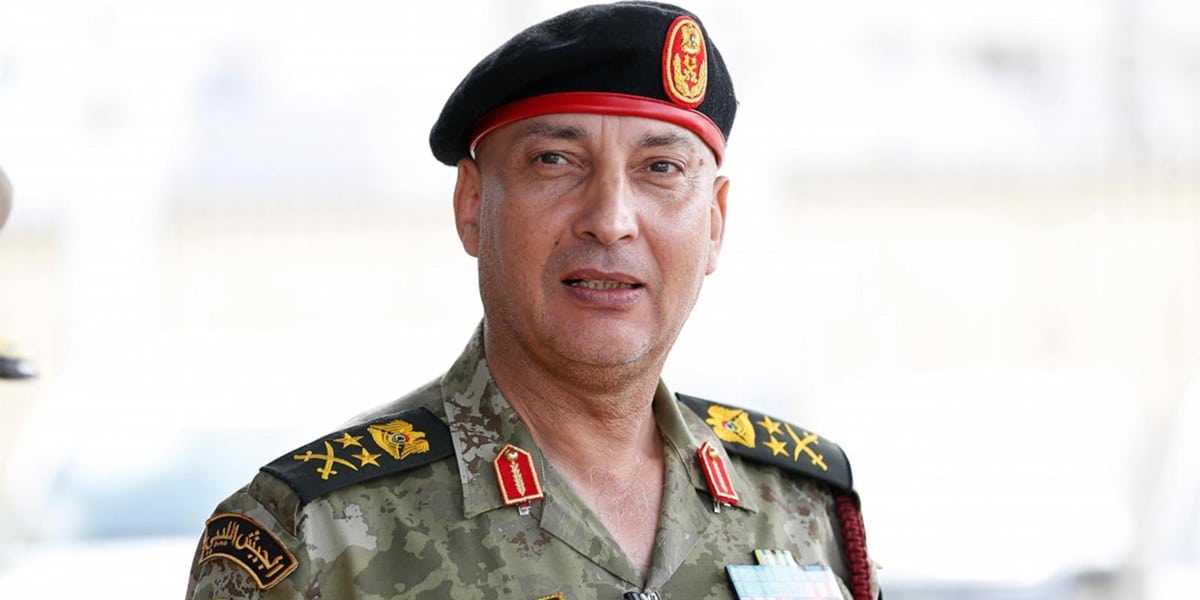
The death of Lieutenant General Mohammed Ali Ahmed al-Haddad, chief of staff of the Libyan army, in an air crash near Ankara goes beyond a simple accident. It intervenes in a Libya that is still fragmented, where each shock at the top of the military apparatus produces lasting political and strategic effects.
The accident, described as technical by Turkish authorities, occurred as Al-Haddad returned from an official visit to Türkiye, a key partner of the Tripoli-based government. There is no evidence at this stage to suggest an intentional action. But in the Libyan context, the timing of an event sometimes matters as much as its causes.
A pillar of the Tripoli camp disappears
Chief of staff under the authority of the government of national unity recognized by the UN, Mohammed Al-Haddad occupied a central position in the military architecture of Western Libya. He ensured both the coordination of regular forces and the maintenance of a fragile balance between militias, political authorities and foreign partners.
He was also one of the main military opponents of the eastern camp, led by Marshal Khalifa Haftar, whose forces had previously tried to seize Tripoli. Its disappearance therefore weakens the Western camp at a time when it was seeking to preserve minimal coherence in the face of persistent internal rivalries.
A regional context far from neutral
The crash comes a few days after a significant diplomatic and military sequence, marked by meetings between the head of the Pakistani army Asim Munir and military officials from eastern Libya, as well as the finalization of a major military cooperation agreement, despite the UN arms embargo.
In this context, the disappearance of the main military leader of Tripoli objectively modifies the balance of power, without it being necessary to establish a direct causal link. The eastern camp, firmly established in Cyrenaica and in part of southern Libya, finds itself facing an adversary temporarily weakened in terms of command.
A strategic vacuum with lasting effects
However, talking about an immediate shift would be premature. The Tripoli army retains its structures, its international support and its capacity for resilience. But the absence of Al-Haddad opens a phase of uncertainty, marked by the question of succession, the restructuring of internal balances and the risk of rivalries at the top of the military apparatus.
This strategic vacuum primarily benefits actors who favor a logic of balance of power to the detriment of political processes supervised by the United Nations. Officially, it was an accident. Strategically, it’s a signal. In Libya, the disappearance of a key man does not necessarily create an immediate winner, but it silently redraws the room for maneuver of the opposing camps.
Also read: