
Swedish environmental activist Greta Thunberg was arrested in London while taking part in a demonstration in solidarity with imprisoned members of the Palestine Action group, recently banned in the United Kingdom. An emblematic arrest in a climate of high tension around pro-Palestinian mobilizations.
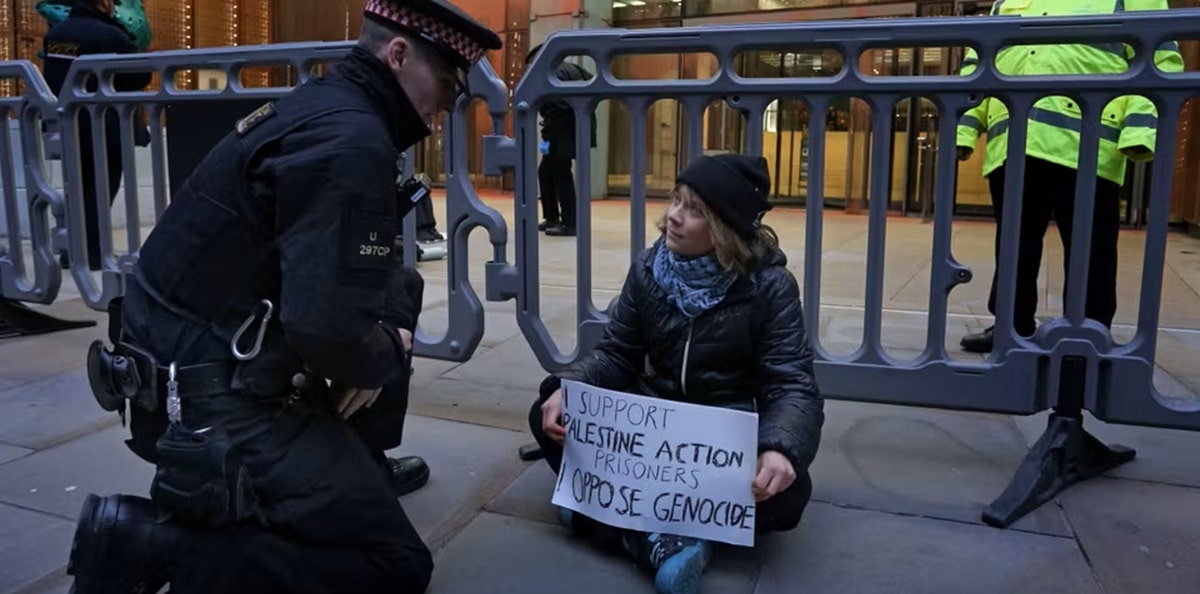
Greta Thunberg was arrested this Tuesday in London during a rally organized in support of Palestine Action activists, detained pending trial. The demonstration took place in front of the premises of the Aspen insurance company, in the heart of the City’s business district. The London police invoke anti-terrorism legislation to justify the arrest.
According to the Defend Our Juries association, the 22-year-old activist brandished a sign expressing her support for Palestine Action prisoners and denouncing the situation in Gaza. Law enforcement confirmed the arrest of a woman for posting a message considered to support a banned organization, without mentioning her identity.
Greta Thunberg denounces “political prisoners”
The rally aimed to denounce the incarceration of eight Palestine Action activists, aged 20 to 31, prosecuted for actions claimed in the name of the movement. According to the organizers, some of them have been on hunger strike for several weeks to protest their prolonged detention.
The day before her arrest, Greta Thunberg published a video on social networks calling the imprisoned activists “political prisoners”. She called on the British government, led by Prime Minister Keir Starmer, to order their release and end the prosecution. Questioned in Parliament, the head of government responded that the procedures had been carried out in strict compliance with the legal framework.
Palestine Action, a movement now banned
Founded in 2020, Palestine Action presented itself as a direct action movement targeting companies linked to the Israeli arms industry, notably Elbit Systems. The group was banned in the UK after a break-in and vandalism at a Royal Air Force base, with damage estimated at several million pounds. Any form of support for the organization is punishable by up to six months in prison.
The decision by the British authorities is the subject of criticism from human rights NGOs, the Council of Europe and the Office of the United Nations High Commissioner for Human Rights. Legal action was also taken by one of the founders of the movement to challenge its ban.
Read also