
For the first time, Tunisia devotes an entire day to olive oil diplomacy. Through this unprecedented event, the authorities are displaying a clear ambition: to transform this flagship product into a strategic tool for economic, cultural and diplomatic influence.
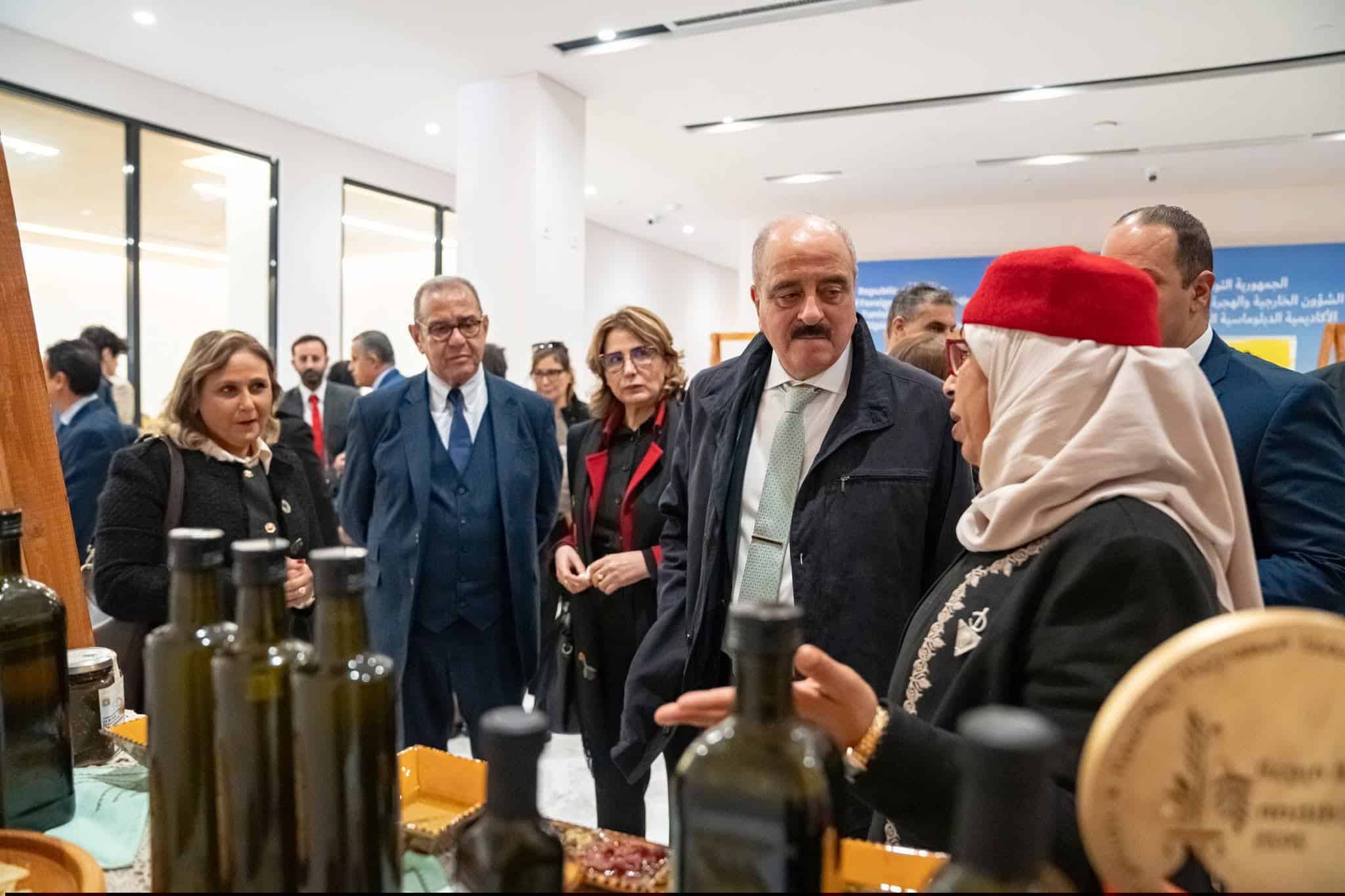
Tunisia seems to want to take a new step in the promotion of its emblematic agricultural product. Monday, December 22, 2025, the International Diplomatic Academy of Tunis hosted the very first “Diplomacy Day for Tunisian Olive Oil”, organized jointly by the Ministries of Agriculture, Foreign Affairs and Trade. An initiative revealing an assumed orientation towards economic diplomacy structured around olive oil.
The strong diplomatic mobilization, marked by the presence of numerous ambassadors, representatives of international organizations and heads of Tunisian missions abroad, reflects the desire to make olive oil a vector of influence and international positioning.
In his opening speech, Foreign Minister Mohamed Ali Nafti stressed that Tunisian olive oil constitutes a symbol deeply anchored in national identity and Mediterranean civilization. He highlighted the central role of diplomatic and consular representations in promoting this product abroad, not only as a commodity, but also as a marker of quality, sustainability and Tunisian know-how. The minister also insisted on the decisive contribution of rural women in preserving the quality of the oil, as well as on the role of the Tunisian diaspora as a natural relay for promotion on foreign markets.
Olive oil as a pillar of the national economy
For his part, the Minister of Agriculture, Ezzeddine Ben Cheikh, presented olive oil as a pillar of the national economy and a full-fledged instrument of economic diplomacy. He presented the new Tunisian vision based on global quality, increasing added value through the export of packaged oil and the conclusion of international partnerships. The minister also highlighted the ability of the olive sector to resist climate change, while recalling Tunisia’s leading position in the production of organic olive oil and the numerous international distinctions obtained.
This orientation is supported by the data put forward by the Minister of Trade and Export Development, Samir Abid. Tunisia is among the main global players in the sector, occupying fourth place in the world in 2024 with more than 10% market share. Tunisian exports of olive oil now reach more than 60 international markets, with an increase of around 16% over the last five years. So many indicators which reinforce the idea of an assumed economic and food diplomacy, targeting in particular the Asian, South American and African markets.
Beyond the speeches, the program for this day focused on a concrete approach, combining scientific interventions, cultural exhibitions, promotion of rural women’s products, presentation of award-winning exporting companies and tasting sessions. A way of combining knowledge, image and sensory experience to strengthen the attractiveness of the Tunisian product.
Read also