

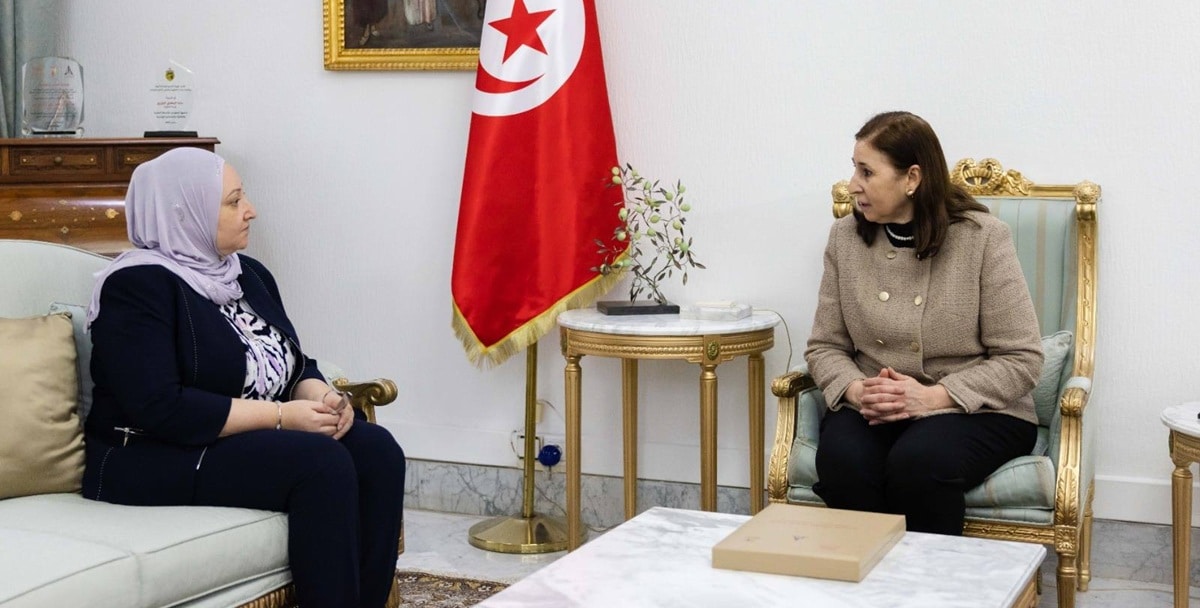
The reform of administrative training was at the center of an interview held at the Government Palace in Kasbah between the head of government, Sarra Zaafrani Zenzeri, and the director of the National School of Administration (ENA), Khawla Abidi. The meeting is part of an approach aimed at structurally and globally overhauling the training system for state executives.
Adapt training to national choices and State priorities
The discussions focused on the need to align training programs for administrative executives with national guidelines and the strategic choices of the State. The head of government underlined the importance of training profiles capable of quickly adapting to institutional changes and the requirements of modern public management.
She insisted on the need to break with traditional administrative practices considered rigid, calling for the training of open, responsive and solution-oriented executives, in order to improve the quality of services provided to citizens and reduce file processing times.
The envisaged reform provides for the development of initial training programs intended for senior and middle managers, with particular emphasis on practical preparation for the exercise of administrative functions within the various state structures.
The objective is to equip future administrative managers with the operational skills necessary to ensure effective management of public affairs, at central, regional and local levels.
Integration of new technologies
Another major aspect of the reform concerns the strengthening of continuing training for all categories of managers, in all ministries and public institutions. This approach aims to support technological developments, encourage innovation and promote the renewal of administrative practices.
The head of government called for coordinated programming of training cycles, based on the use of new technologies and accompanied by periodic evaluation mechanisms of acquired skills.
Sarra Zaafrani Zenzeri called for the development of a global action plan, consistent with the State’s economic and social policy and the 2026-2030 development plan. This plan must include initial and qualifying training cycles intended for central, regional administrations and local authorities, in order to strengthen the monitoring and supervision of public projects.
ENA’s commitment to implementing reforms
For her part, the director of ENA expressed the institution’s commitment to implementing the required structural reforms, updating initial and continuing training programs and ensuring their adequacy with the needs of ministries, public establishments and the job market.
She also presented a report relating to the 17th training session entitled “Administrative leadership and public innovation”, organized by the ENA as part of its skills-building activities.
Read also