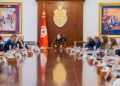

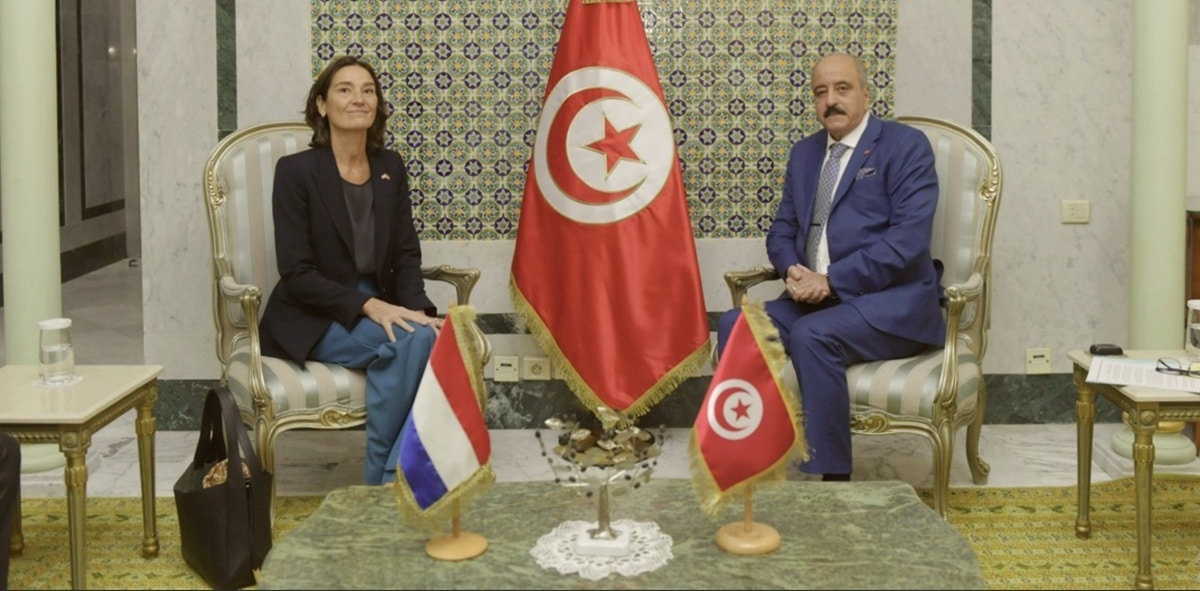
On the instructions of President Kaïs Saïed, Foreign Minister Mohamed Ali Nafti summoned the Dutch ambassador in Tunis to notify her of an official protest. This approach comes after acts deemed contrary to diplomatic practices, in a context already marked by tensions with the European delegation.
A formal summons
The Minister of Foreign Affairs, Migration and Tunisians Abroad, Mohamed Ali Nafti, received the ambassador of the Kingdom of the Netherlands, Josephine Frantzen, at the ministry’s headquarters. The purpose of this summons was to send him a firm protest on behalf of the Tunisian state.
According to information provided by the ministry, the authorities accuse the Dutch diplomat of having violated certain fundamental rules of diplomatic work. The minister asked him to strictly respect the practices in force and to refrain from any form of intervention in the internal affairs of the country, a red line that Tunis claims to defend consistently.
A direct instruction from President Kaïs Saïed
The approach is not trivial: it was undertaken on the direct instruction of the President of the Republic, Kaïs Saïed. The Head of State would have instructed the Minister of Foreign Affairs to also notify the European authorities of a challenge, targeting the initiatives of a diplomat stationed in Tunis accused of having acted outside the protocol framework.
Without naming her publicly, the president castigated behavior that he considers “incompatible” with diplomatic standards and with the respect expected of Tunisian institutions. An exit which is part of the hard line adopted by Carthage in the face of what it perceives as external interference.
This new incident comes at a time when relations between Tunis and certain European representations are experiencing a phase of tension. A few days earlier, the European Union ambassador in Tunis, Giuseppe Perrone, had already been summoned for similar grievances, linked to initiatives deemed non-compliant with diplomatic commitments.
Read also