

The Cairo International Film Festival (CIFF) has unveiled, in partnership with the International Federation of Film Critics (FIPRESCI) and the Egyptian Film Critics Association (EFCA), the list of the 25 greatest Egyptian films of the first quarter of the 21st century. Launched on the occasion of FIPRESCI’s centennial, this initiative marks a milestone in the long-standing collaboration between international critics and one of the most prestigious festivals in the Arab world and Africa.
The results of this poll will be published in a special book to coincide with the 46th edition of the festival, scheduled to take place from November 12 to 21, 2025. The volume will include critical essays on each of the 25 selected films, along with an in-depth study of the artistic and production trends that have shaped Egyptian cinema since 2000. A dedicated panel discussion will also be held during the festival to present the publication and engage audiences, critics, and professionals in dialogue.
The idea for this poll originated from a brainstorming session that brought together the three partners—FIPRESCI, CIFF, and EFCA—with the aim of documenting over a century of Egyptian cinema while highlighting recent achievements through a rigorous critical lens. The project was officially announced in May 2025 at the Egyptian Pavilion during the 78th Cannes Film Festival’s Marché du Film.
A rigorous voting process
To establish the ranking, a detailed voting form was distributed to all members of the Egyptian Film Critics Association, accompanied by a list of 881 feature films released in Egypt between January 1, 2001, and July 31, 2025. While the final five months of the year were excluded to allow the results to be announced ahead of the festival, the selection encompassed both theatrical releases and titles that premiered on satellite channels or streaming platforms, ensuring fair competition across all formats.
Sixty-three critics participated in the vote, reflecting a strong level of engagement within the profession. This collective effort now stands as a valuable reference for audiences, researchers, and historians seeking to understand which works have most profoundly shaped Egyptian cinema over the past twenty-five years.
Highlights from the selection
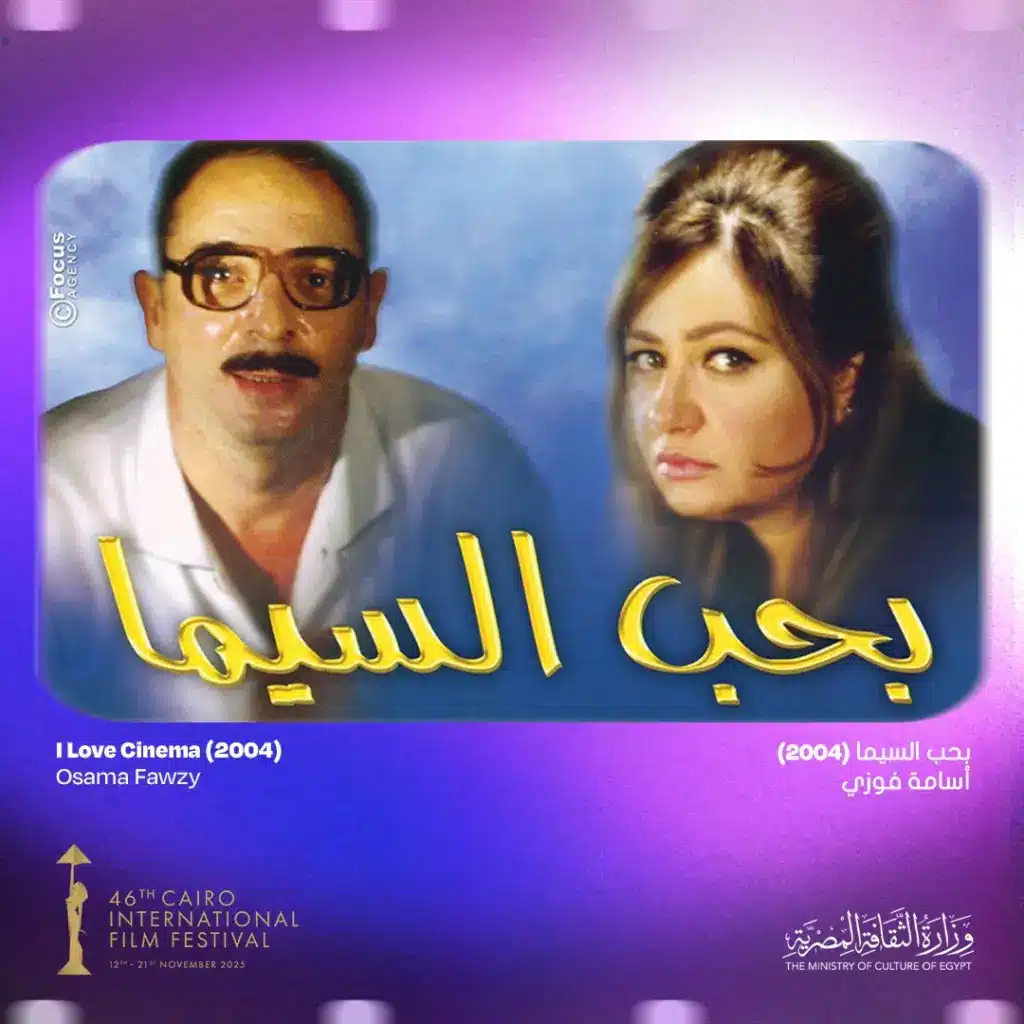
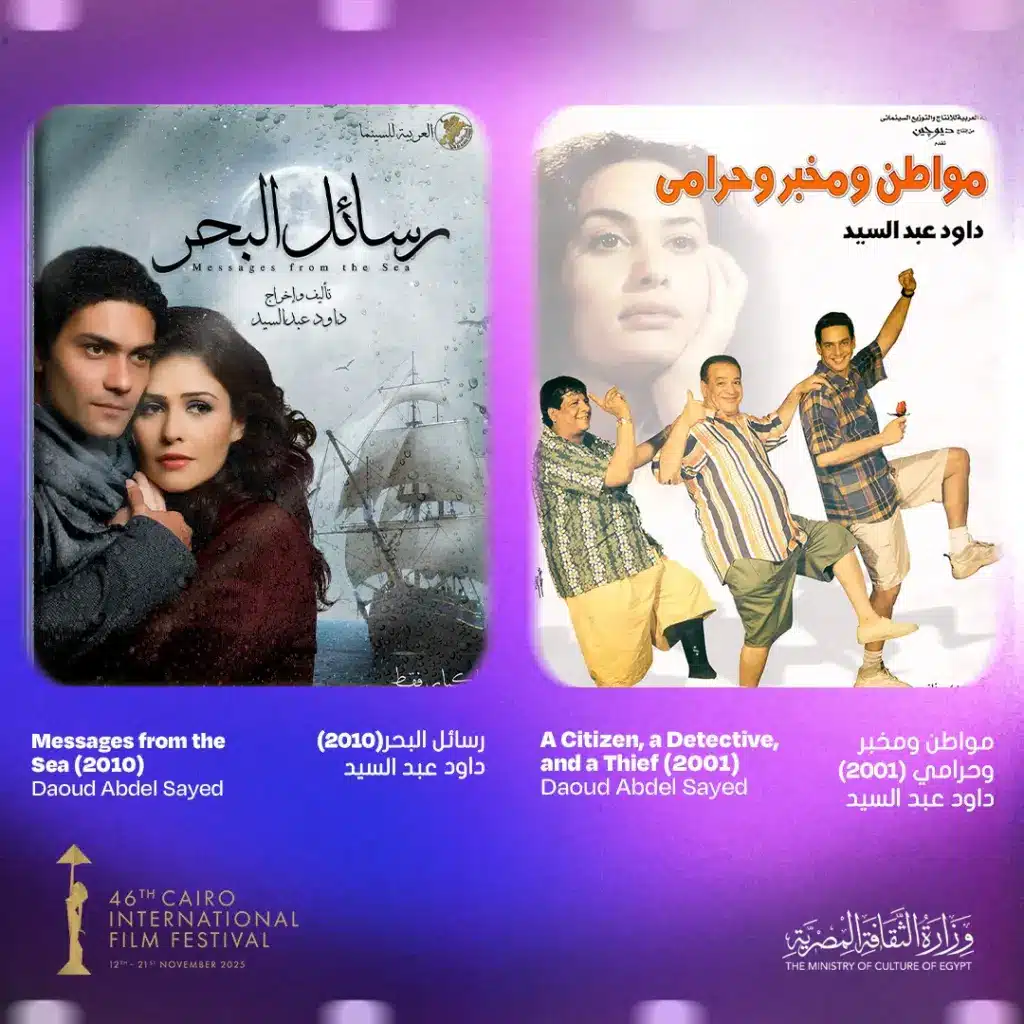
Among the highest-ranked titles, I Love Cinema (2004) by Osama Fawzy stands out as a tender exploration of how cinema itself can become a source of fascination and identity for younger generations. Through the eyes of a boy captivated by moving images, the film reflects on how art intertwines with everyday life and social transformation in contemporary Egypt. Similarly, Daoud Abdel Sayed’s Messages from the Sea (2010) delves into memory and identity through a poetic portrait of solitude, revealing a cinema that is both intimate and profoundly human.
The list also celebrates filmmakers who have successfully bridged critical acclaim and international visibility. Marwan Hamed’s The Yacoubian Building (2006) not only launched his career but also brought Alaa Al Aswany’s bestselling novel to global attention. The film gave Egyptian literature and cinema unprecedented international visibility while tackling the country’s political, social, and moral complexities. The influence of master filmmaker Youssef Chahine remains unmistakable, notably through his collaboration with Khaled Youssef on Chaos (2007), a work that reaffirms Chahine’s enduring voice and his ability to confront pressing social realities through narrative intensity and visual audacity.
The ranking also acknowledges the rise of bold, experimental voices redefining the boundaries of Egyptian cinema. Omar El Zohairy’s Feathers (2021) embodies this contemporary spirit—provocative, surreal, and uncompromising. Its Cannes premiere and the controversy it triggered back home revealed a striking contrast between international acclaim and domestic criticism, underscoring the ongoing tension between artistic modernity and social perception in Egypt. Similarly, Ahmad Abdalla’s Microphone (2011) captures the energy of Alexandria’s underground music and art scene, portraying a vibrant and defiant youth culture. Both Feathers and Microphone won the Golden Tanit at the Carthage Film Festival, confirming their impact across the Arab world.
Social and urban narratives also occupy a central place within the ranking. In the Last Days of the City (2016) by Tamer El Said transforms Cairo into a living protagonist—a space where personal and collective tensions intersect. Likewise, Yousry Nasrallah’s Scheherazade, Tell Me a Story (2009) foregrounds women’s perspectives and marginalized voices, emphasizing how contemporary Egyptian cinema increasingly engages with social diversity and representation.
Ultimately, the list reflects a delicate balance between accessibility and artistic ambition. Egyptian cinema in the 21st century has managed to maintain its dialogue with audiences while constantly renewing its forms and themes. This selection attests to the vitality of a national cinema that navigates between tradition and innovation, between local resonance and international recognition, all while continuing to interrogate the cultural and social transformations of modern Egypt.
A project rooted in the history of criticism and the Cairo festival
Founded in 1976, the Cairo International Film Festival remains the only Arab and African festival classified as a “Category A” event by the International Federation of Film Producers Associations (FIAPF), placing it among the world’s leading cinematic institutions. This project reflects the CIFF’s ongoing mission to celebrate film heritage while fostering contemporary creativity.
FIPRESCI, founded in Brussels in 1925, unites national associations of film critics from more than fifty countries, along with individual members from around forty others. Its mission is to defend the role of film criticism and promote film culture worldwide.
Together, FIPRESCI, EFCA, and CIFF have produced a unique panorama of Egyptian cinema in the early 21st century—a work of memory and transmission that invites audiences to revisit twenty-five years of creation through the discerning eyes of critics. The forthcoming publication and public discussion promise to deepen reflection on the vitality of a cinema in constant dialogue with its history and its present.
Complete ranking as established by the critics
- I Love Cinema (2004) — Osama Fawzy
- Messages from the Sea (2010) — Daoud Abdel Sayed
- A Citizen, a Detective and a Thief (2001) — Daoud Abdel Sayed
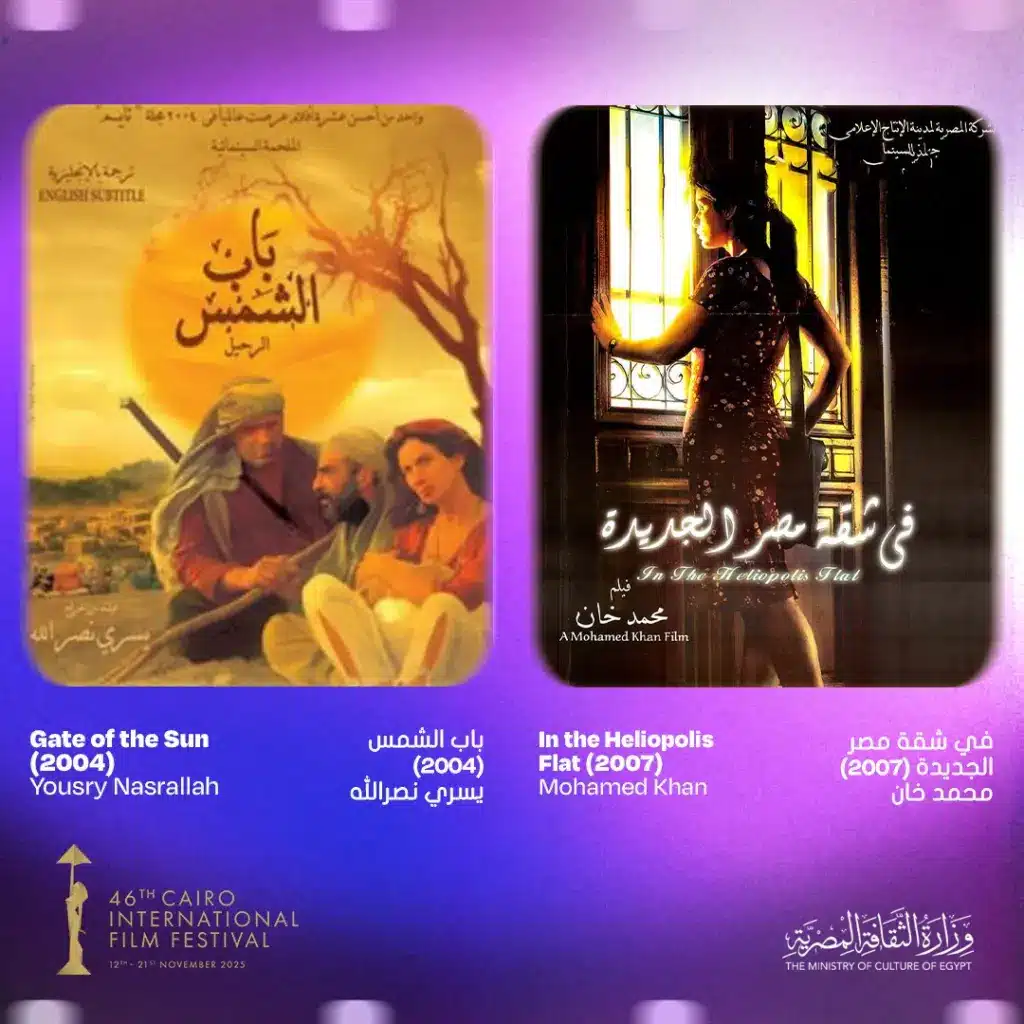
- The Gate of the Sun (2004) — Yousry Nasrallah
- In the Heliopolis Apartment (2007) — Mohamed Khan
- Sleepless Nights (2003) — Hani Khalifa
- The Best of Times (2004) — Hala Khalil
- Microphone (2011) — Ahmad Abdalla Elsayed
- Ibrahim El Abyad (2009) — Marwan Hamed
- The Yacoubian Building (2006) — Marwan Hamed
- The Magician (2001) — Radwan El-Kashef
- In the Last Days of the City (2016) — Tamer El Said
- His Excellency the Minister (2002) — Samir Seif
- Scheherazade, Tell Me a Story (2009) — Yousry Nasrallah
- Coming Forth by Day (2012) — Hala Lotfy
- The Closed Doors (2001) — Atef Hatata
- Feathers (2021) — Omar El Zohairy
- The Aquarium (2008) — Yousry Nasrallah
- Seeking a Way Out for Mr. Rambo (2025) — Khaled Mansour
- Factory Girl (2014) — Mohamed Khan
- One-Zero (2009) — Kamla Abu-Zekry
- Leisure Time (2006) — Mohammed Moustafa
- The Island (2007) — Sherif Arafa
- Abu Zaabal 89 (2025) — Bassam Mortada
- Chaos (2007) — Youssef Chahine & Khaled Youssef
Neïla Driss