

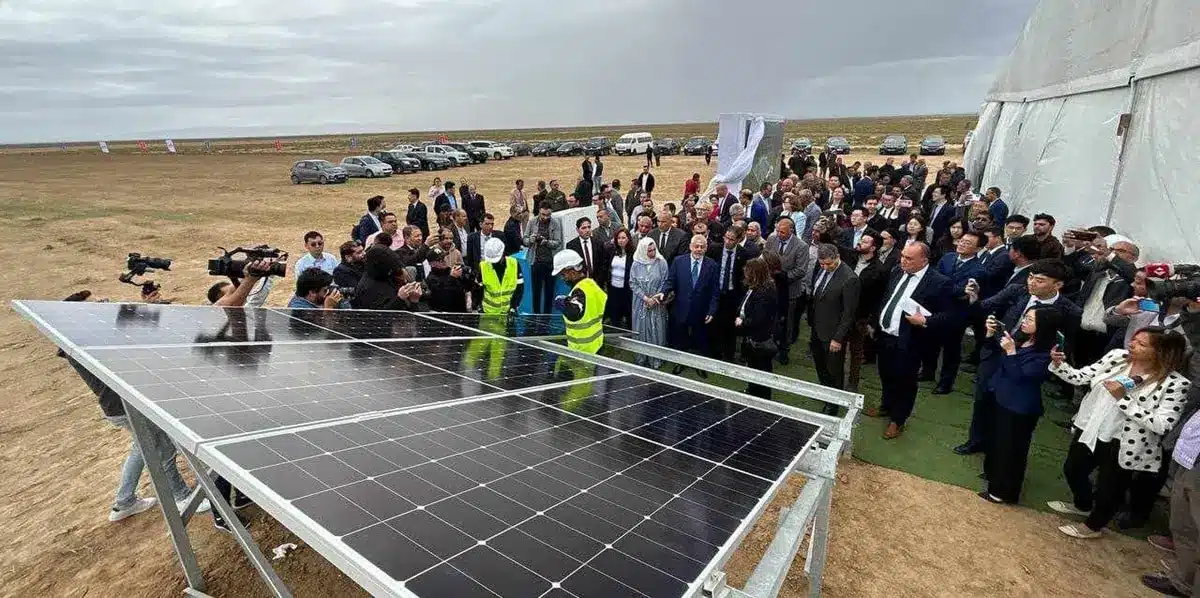
Spread over 200 hectares, the Sbikha photovoltaic plant will soon inject 230 MW into the national grid, marking a key step towards the country’s energy transition.
Tunisia is preparing to take a major step forward in its energy policy. In Sbikha, in the governorate of Kairouan, the largest solar power plant in the country will be commissioned at the end of November 2025, according to Sofien Amara, general manager of the private company owning the project.
The plant, 95% complete, will begin to inject its first megawatts of solar energy into the national network of the Tunisian Electricity and Gas Company (STEG). The public company will be the sole buyer.
A colossal project for record production
Located on 200 hectares of salinized land, the plant will produce 230 megawatts per year, or 1.3% of national electricity consumption. With a total investment of 260 million dinars, this project symbolizes the rise of Tunisian solar energy in a country where nearly two thirds of energy needs are still imported.
The economic benefits are notable: the production will reduce natural gas imports by approximately $25 million per year, while reducing the national energy deficit. Environmentally, the site should avoid the emission of 120,000 tonnes of CO₂ each year and stabilize the electricity supply during summer peaks.
A model of sustainability and local inclusion
Beyond its energy performance, the project stands out as a model of ecological reconversion. Around 210,000 photovoltaic panels have already been installed, with a further 10,000 units currently being assembled.
Unprecedented fact in Tunisia: silent systems integrated into high voltage cables have been put in place to protect birds and preserve biodiversity. The plant produces no noise or pollution, and provides for full recycling of the panels after twenty years of operation.
On the social level, 897 jobs were created, including 26 occupied by women, with more than half of the recruitments carried out locally in Kairouan. According to Donia Mejri, engineer in charge of the environmental and social aspect, the company trained workers in solar professions and encouraged the creation of local microenterprises.
Material donations were also made to schools, dispensaries and breeders in the region impacted by the construction site, consolidating the territorial anchoring of the project.
A national ambition to realize
This pilot project demonstrates Tunisia’s considerable solar potential. The promoters now hope to extend this experience to other regions through a strengthened public-private partnership.
The State aims to increase the share of renewable energies to 35% by 2030. But, experts warn, this trajectory will depend on clear public guarantees and a more attractive investment environment for national and foreign private actors.
Read also